


What we cover

War in the Middle East is creating a bottleneck for the global supply of fuel to send sign prices skyrocketing. For 80 consecutive days in spring 2026, the national average gas price was above $4.00 per gallon. After a brief respite in the conflict, tensions have escalated anew, and prices are once again above that threshold.
A new analysis from Upside shows that the effects of these high costs spread far and wide. In surveying thousands of consumers and analyzing three years’ worth of retail transactions, we learned that high gas prices change not only how consumers buy fuel, but how they buy food, as well.
Consumers say they’re cutting back across categories, driving a bit less and cooking more meals at home. And while that might sound like good news for grocers, we learned that cooking more often does not actually translate to more in-store spend.
Fuel prices spark a grocery pullback: The surprising data
As gas prices soared and inflation began heating back up, American consumers said they started pulling back heavily on non-essential spending.
When we surveyed consumers this spring, about 32% said they had dined out either zero times or once in the past month. Furthermore, nearly half of respondents said they were buying more groceries to cook at home. These figures support the fact that consumers are feeling budget pressure and adjusting their habits accordingly.
As a grocer, these trends might bring a sense of security. Foot traffic appears on the rise, and grocery stores are better positioned to weather this storm than restaurants are.
But we see that share of stomach and share of wallet are not the same. Just because people are forced to cook more often at home does not mean they are actually spending more money on groceries — in fact, we find the opposite.
Higher prices at the gas pump are triggering margin erosion in grocery aisles.
When we asked consumers how they’ve changed their grocery shopping due to the war in Iran, more than a third said that they skipped buying “treat” items and switched to private-label brands.
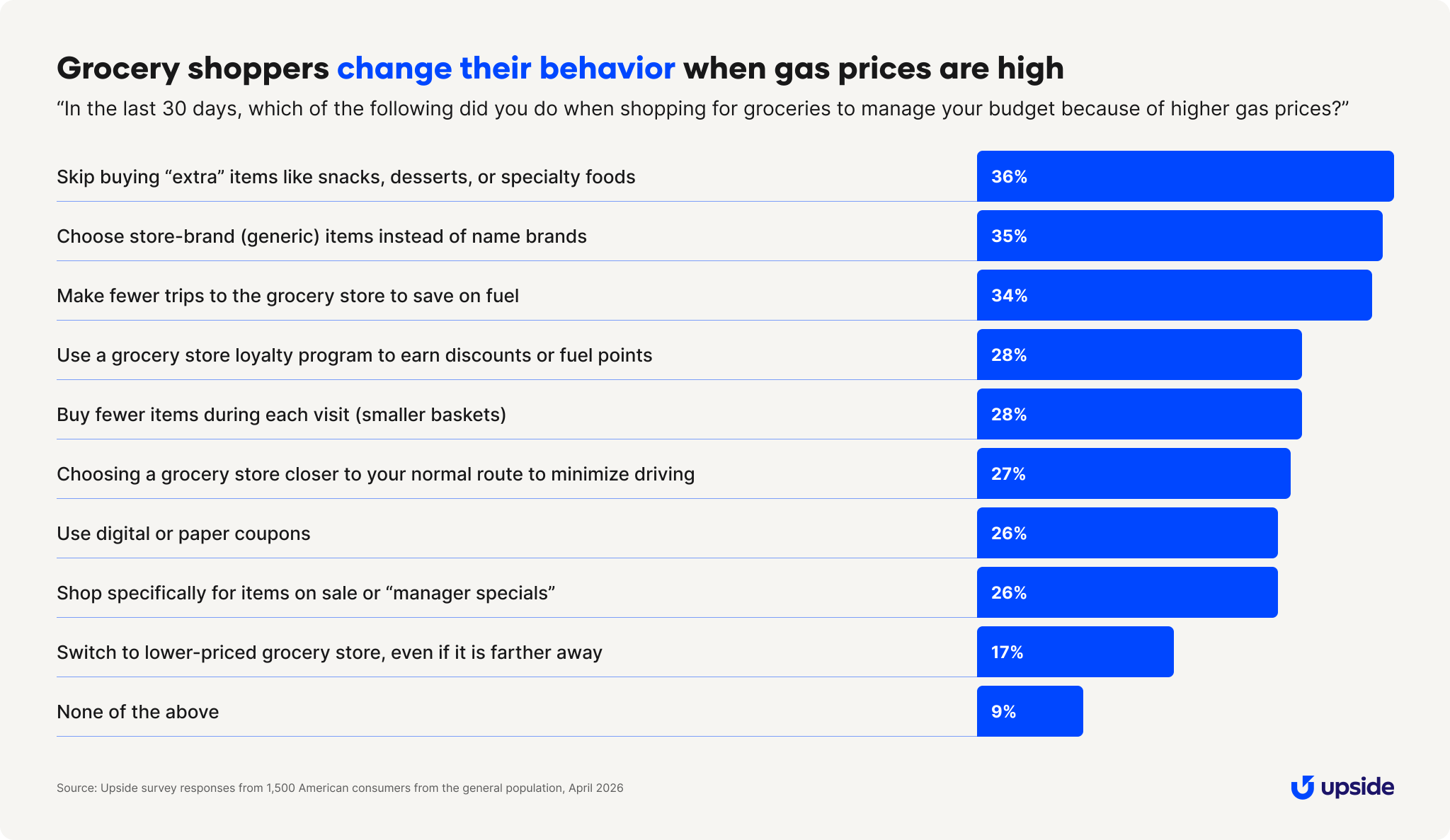
Above, you can see that eight of the 10 answer choices have more than 25% support, and the share of consumers who have tried none of these tactics sits at under 10%.
But this trend isn’t unique to the 2026 fuel crisis. Using three years of fuel sign prices and transaction data from over 1,000 U.S. grocery stores, we calculated what happens at grocery stores when fuel prices increase. In economics, this is called elasticity — a measure of the sensitivity of demand to a change in price.
When gas prices increase for consumers by 1%, grocery stores see a considerable drop in their total visits and revenue.
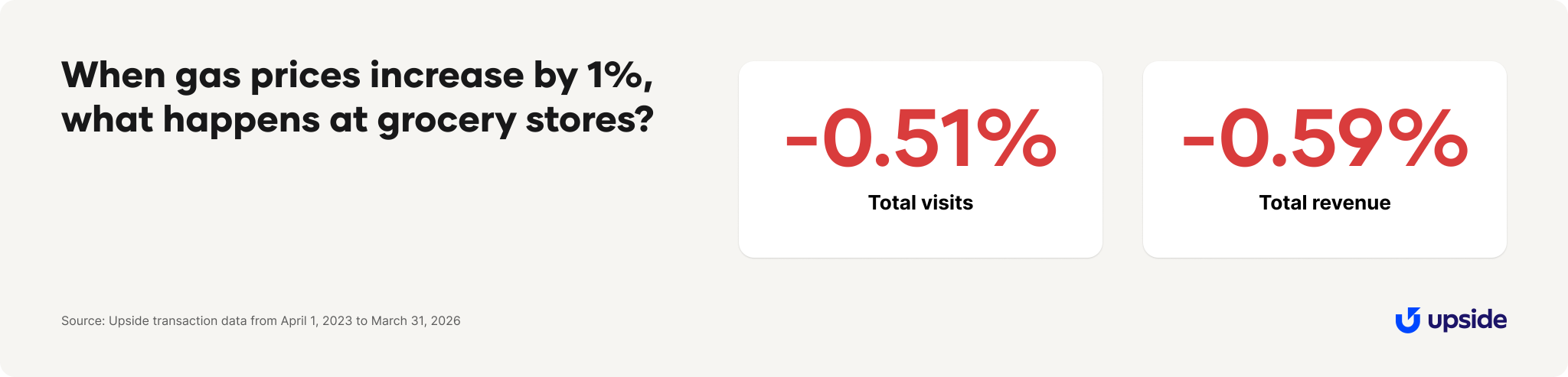
Note that the drop is not proportionate — a 1% lift in fuel prices does not cause a 1% reduction in total visits or revenue. This indicates that grocery store demand is relatively inelastic — for most households, groceries are necessary purchases. They’re not cutting off their trips to the store entirely.
However, we do see a strong relationship between fuel prices and grocery shopping behavior — one that even most grocers might not expect.
Shopping more is not spending more
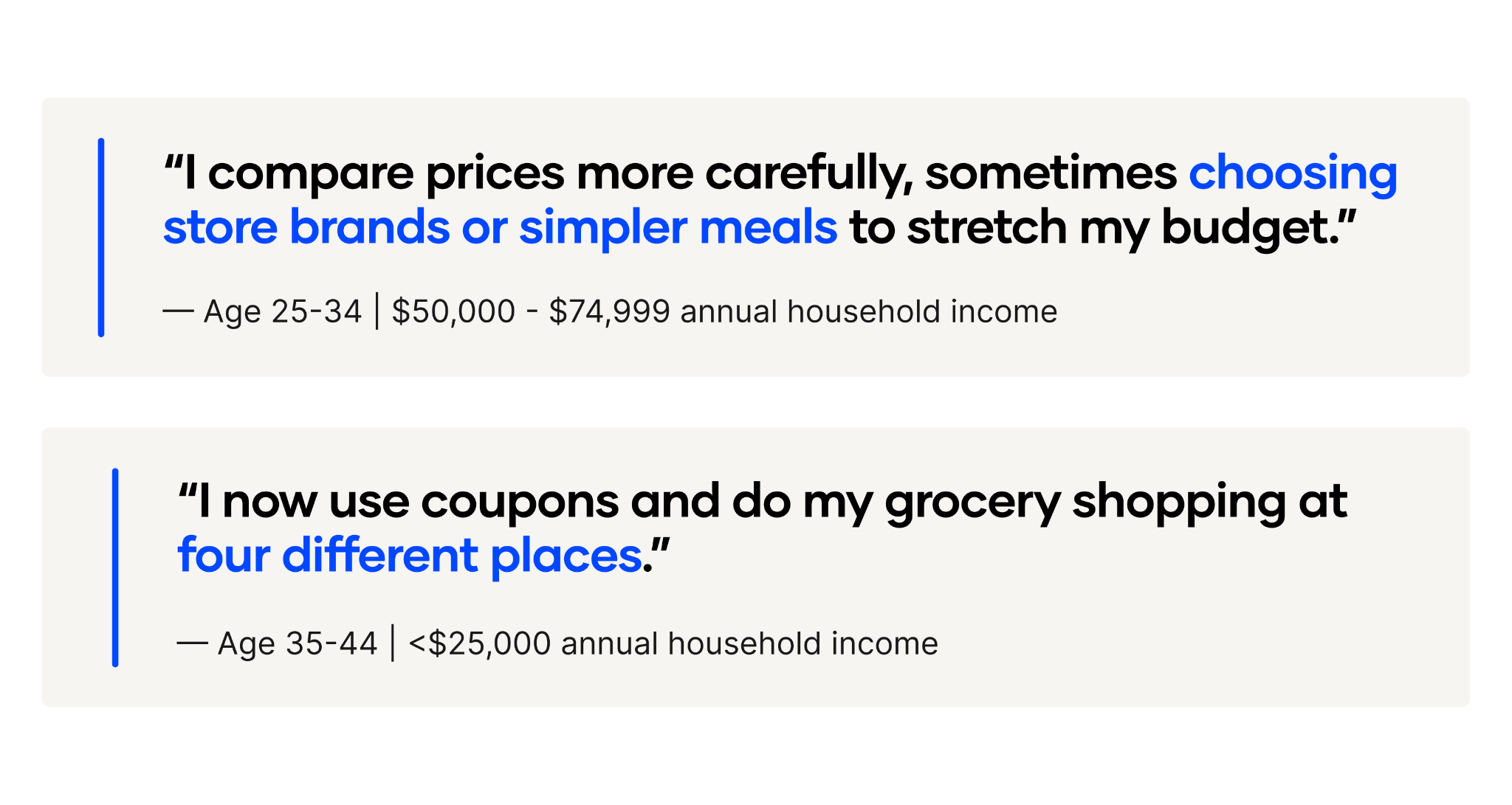
In this economic environment, consumers are buying more of their food at the grocery store to stay within their already-stretched budgets. But rather than simply stacking new items onto their existing weekly buy, they’re throwing out the old playbook and paying closer attention to every dollar.
Some of those habits, as you can see from our survey, include value-seeking solutions like loyalty programming, coupons, and cash-back marketplaces.
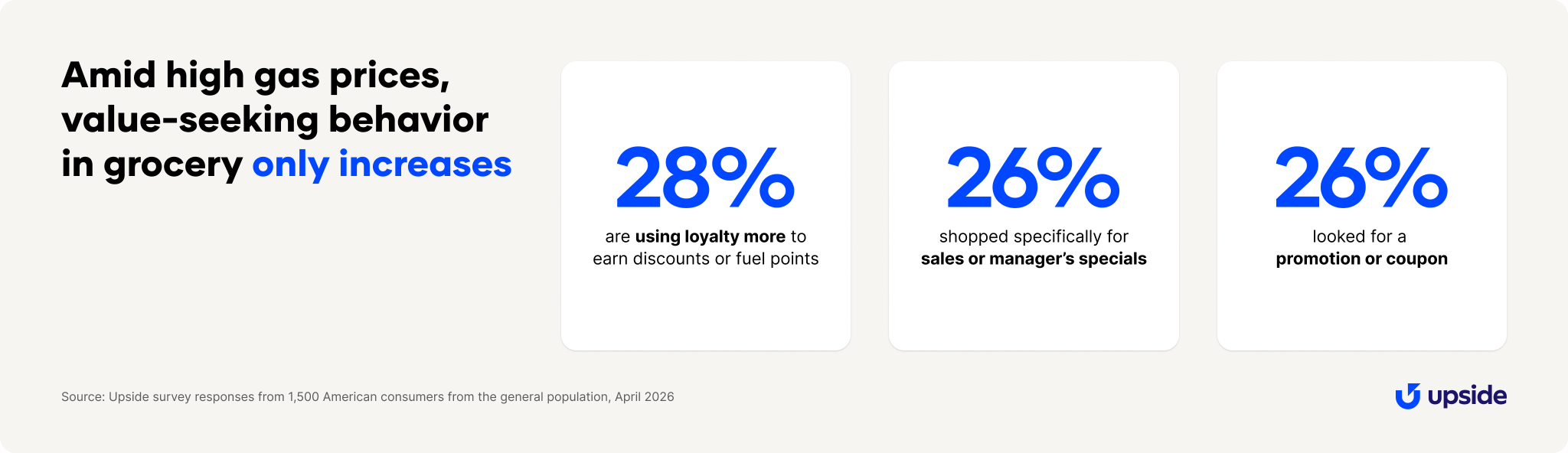
Shoppers are leaning heavily on tools that deliver value
The message for grocery retailers is that budget restrictions have consumers feeling like they’re forced to visit the grocery store more. And in an effort to stay on top of their costs, they’re rethinking the whole cart.
Part of that reassessment includes using tools like Upside to earn cash back on grocery purchases. Upside uses personalized promotions to help retailers stay top-of-mind with value-seeking customers and win those up-for-grabs trips profitably.
Amid the spring fuel crisis caused by the war in Iran, Upside transactions made up a larger share of total transactions at participating grocery stores. From pre-war levels in January and February to the sustained peak levels of May, Upside offer share increased by 32% for participating grocers.
Shoppers are reconsidering their carts. Don’t lose their trips.
Learn more about how Upside can help grocers adjust to consumer behavior trends and win trips that are up for grabs without sacrificing profit.



Request a demo
Request a demo of our platform with no obligation. Our team of industry experts will reach out to learn more about your unique business needs.


