




What we cover

Every driver feels rising gas prices differently, and the difference tends to track one variable: how often they’re at the pump. The more frequently someone fills up, the more a sustained price increase actually costs them — and the more likely they are to change something about how they buy gas rather than just pay more for it.
That pattern is a useful lens for thinking about gig drivers, who are among the most frequent drivers in the country. If frequency alone drives more deliberate fuel decisions, gig drivers should be some of the most price-sensitive drivers on the road. But there’s another variable worth adding to the picture: gig drivers can also change who they drive for, shifting hours toward whichever platform makes the terms worth it.
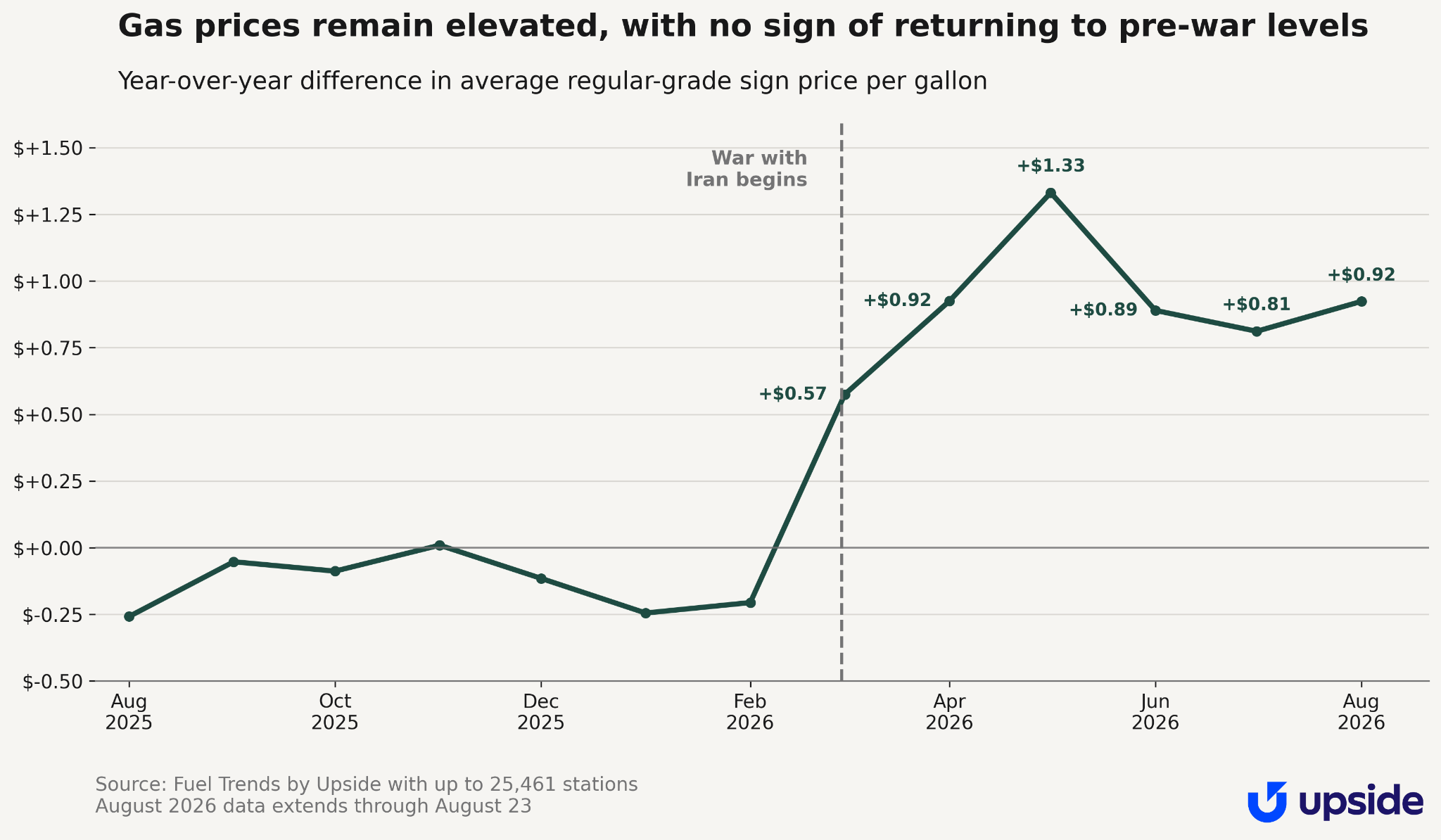
The price environment isn't easing up
Gas prices have spent much of 2026 at levels the country hasn't sustained since 2022, and the trend line is flat rather than falling. This isn't a spike that resolves itself in a few weeks — it's a cost environment drivers are having to plan around, not just absorb.
Drivers are changing how they buy gas
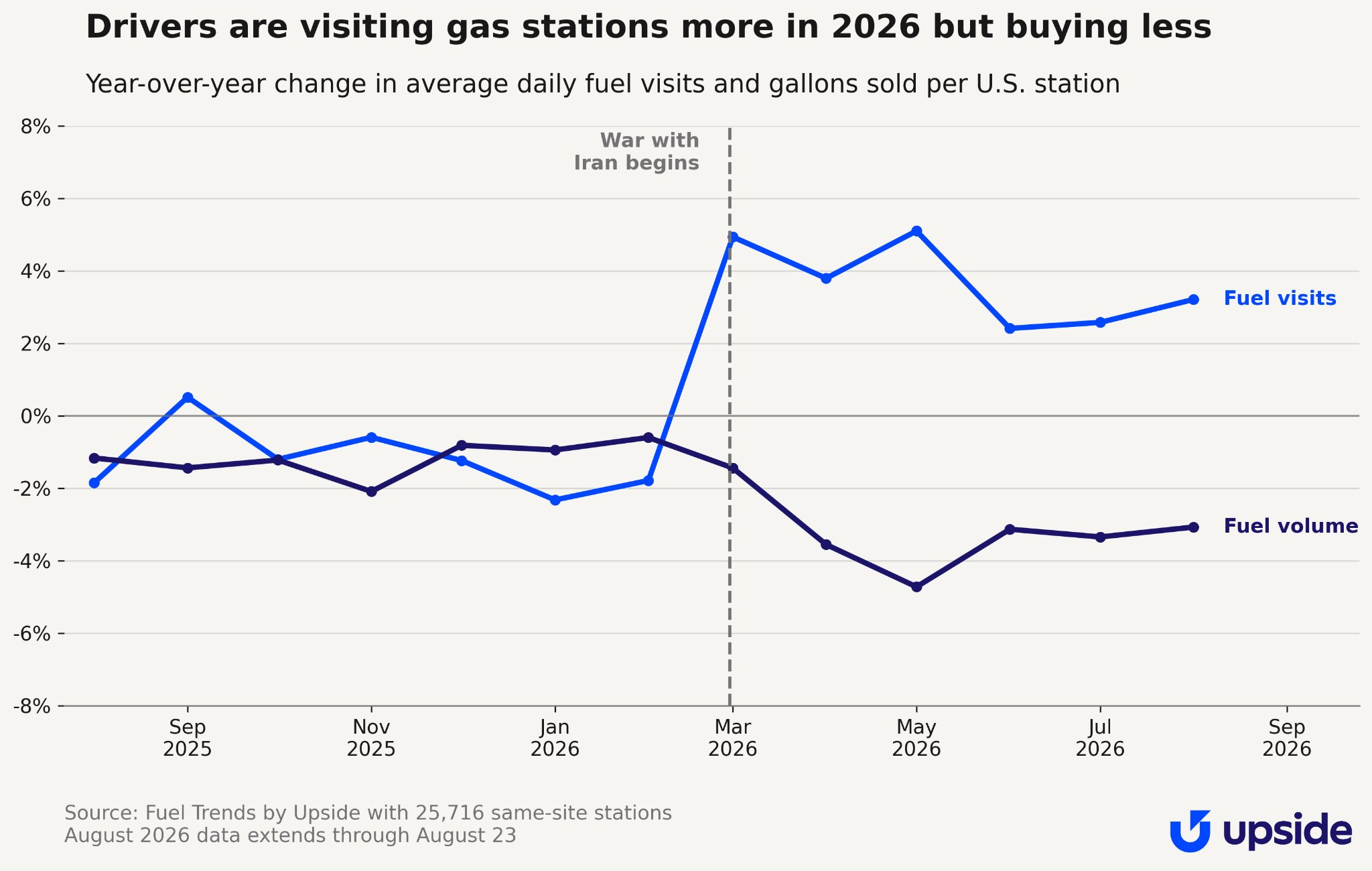
That price environment is changing the way drivers buy gas. Across the general population, the response to sustained high prices shows up more in how people buy gas than whether they drive.
Fuel volume at the average station is down 3.2% year-over-year from March to August 2026, while the number of fuel visits is up 3.7% over the same stretch. Put together, that's a lot of smaller, more deliberate fill-ups — demand bending under the cost pressure, not breaking.
Frequent drivers are more likely to seek out ways to save
While frequent drivers are cutting back (72% say they're driving less) at a slightly lower rate than the general population, high mileage doesn't buy immunity from high prices. In fact, frequent drivers are quicker to act on rising costs and put more effort into savings.
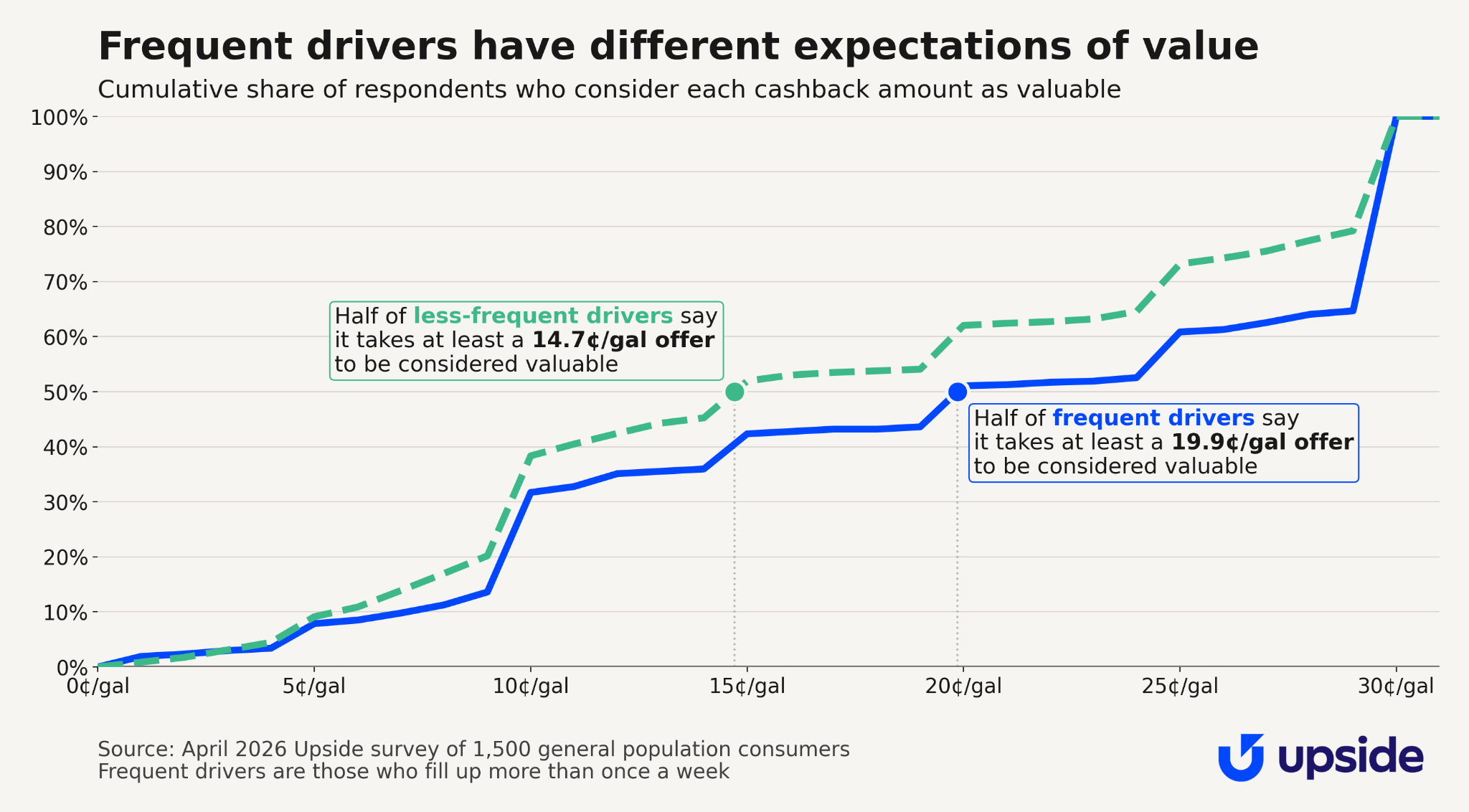
Ninety percent of frequent drivers — those filling up more than once a week — said they'd adopted at least one strategy to save money at the pump, and loyalty programs were the single most common tactic. Frequent drivers reported using 23% more saving strategies than infrequent ones, which tracks: the more often you're at the pump, the more the price increase actually costs you, and the more effort you put into managing it.
They also have higher expectations of value in order to shift their behavior — the same pattern that shows up when gig drivers weigh whether a platform’s terms are worth staying for.
Gig drivers carry more of the cost
Gig drivers, some of the most frequent drivers, carry more of this cost. Fuel isn't a line item that gets smoothed out over a paycheck — it's paid directly, trip by trip, out of what they take home. Platform earnings don't move when gas prices do, so every dollar spent at the pump comes straight out of the driver's margin.
For gig drivers, the math has gotten meaningfully worse. Fuel's share of rideshare gross hourly earnings rose from 13.2% to 17.4% in the first quarter of 2026 alone (source) — the highest that figure has been since 2022 — and prices have continued climbing since then, so the current squeeze is larger than that number shows. For a driver logging real hours on the road, that's a direct cut to what the work actually pays.
I previously published a paper on rideshare activity in New York City from 2015 to 2018 and found that a 10% increase in fuel prices was associated with a 3.7–4.9% decline in rideshare trips. Even gig drivers — those who pay for their own gas to earn an income — turned out to change their behavior quickly once the cost-benefit stopped making sense.
That relationship predates the current price environment, but there's reason to believe the effects today are even larger. First, the gas price increases in 2026 are dramatically larger than those in the late 2010s. Second, there are now many more options for independent drivers beyond rideshare than there were ten years ago, such as package or food delivery. Having additional options means drivers can more easily switch platforms to those that require fewer miles or more fuel discounts.
Again, it’s not just about giving up driving completely, but switching how, when, and for whom to drive.
A boost changes the math
Gig drivers responding to high gas prices aren't choosing between two unrelated options — driving less and reallocating hours across platforms are two sides of the same underlying math. A fuel boost addresses both at once. For drivers staying with a platform, it restores the earnings math the fuel-cost data above described. For drivers splitting hours across platforms, it tilts the math of each marginal hour toward the platform funding it.
A per-gallon boost is conditional on the cost drivers are actually facing, and by design, it self-targets the highest-mileage drivers who need it most — the same drivers this data shows are most exposed and most likely to act. That's a different mechanism than a fare increase, which passes the cost to riders rather than protecting driver earnings directly, or a per-trip bonus, which pays out on trips that would have happened at the old price anyway. A per-gallon boost only pays out against the specific cost driving the behavior change. It also concentrates relief on drivers of gas-powered vehicles — the group actually exposed to the price swings behind all of this.
In a market where nearly all driver supply is now flexible, that distinction matters at the platform level, too. All else equal, in a market where drivers reallocate hours fluidly, the platform funding fuel relief makes each of its hours worth more, and contested hours flow toward it.
Driver flexibility is a feature and a bug
Rideshare and contract delivery labor markets run on the assumption that supply is flexible — that drivers can pick up hours when demand is high and step back when it isn't. That flexibility is usually framed as a feature. But it cuts both ways. The same drivers who supply the most hours, and who can least afford a hit to their per-hour earnings, are also the ones most able — and increasingly willing — to drive less or to drive for different platforms when the cost of doing the job outpaces what it pays.
High gas prices don't just make driving less profitable. They give the drivers that platforms depend on most a reason to either cut back or take their hours elsewhere — exactly the group platforms can least afford to lose.
Sign up for more fuel and c-store trends from Upside


Request a demo
Request a demo of our platform with no obligation. Our team of industry experts will reach out to learn more about your unique business needs.


