


What we cover

My colleague Jeff Rubin and I recently joined Abbey Lewis from CSP for a webinar titled "What's Next for Fuel & Convenience: Growth Strategies for 2026 and Beyond." Our conversation covered the trends shaping the industry and how retailers can adapt their strategies now to protect margin, win trips, and build loyalty in a more fragmented market.
We shared Upside data from 20,000+ stations and millions of consumer transactions. Here are the key insights.
What's driving customer behavior as we head into 2026
Right now, we're following three trends in the industry that are reshaping how fuel customers choose when and where to stop.
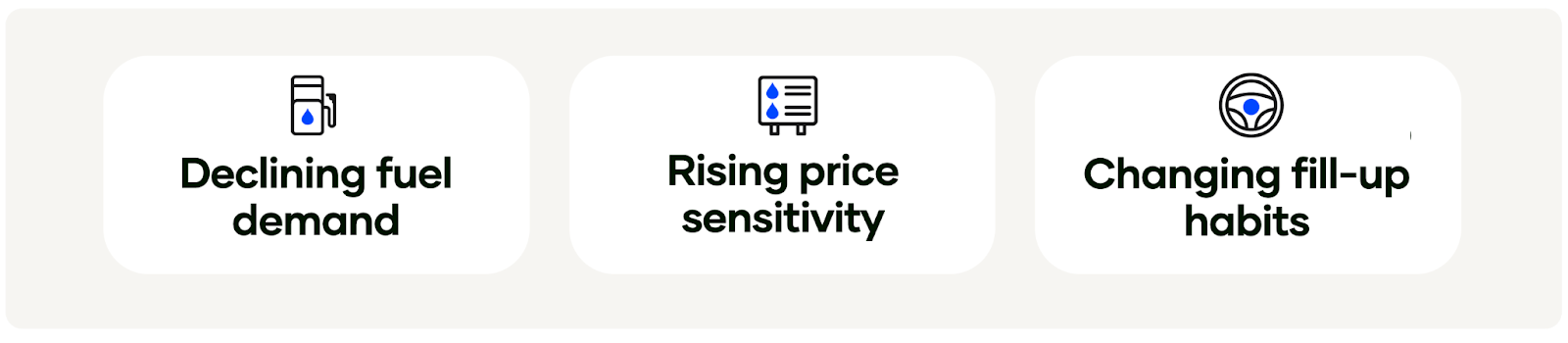
There’s a persistent, gradual decline in fuel demand.
This isn't a blip or a phase. Fuel demand will likely never return to pre-pandemic levels, which means retailers have two imperatives: win as many of those remaining gallons as they can, and find new ways to generate revenue to sustain long-term success.
Fuel customers are very price-sensitive.
When we surveyed fuel customers, 81% told us they compare prices across locations. These uncommitted customers prioritize their own value over loyalty to any particular retailer or brand, and they're willing to cross-shop to get the best deal.
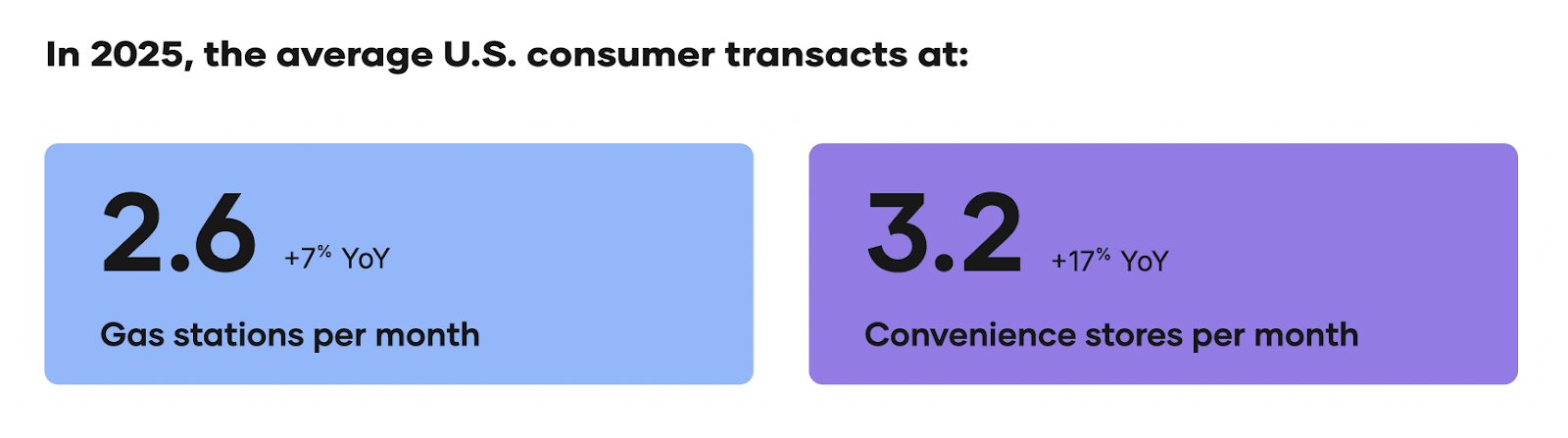
The good news? They're also opportunistic. Our data shows that 77% decide where to fill up less than two hours before they actually do, and they'll travel further for the right incentive. This short decision window means retailers have a narrow but powerful opportunity to influence behavior — if they can reach the right customer at the right moment.
Sign prices are low, but cheaper gas means fewer trips.
Gas prices change how consumers behave at the pump. When gas is cheaper, people fill up more at once. That means they're coming to the pump less often, and every missed trip is one less chance to get them inside the store.
However, low sign prices don’t mean fuel is a weaker profit driver. OPIS reports that national fuel margins have averaged roughly 40 cents per gallon over the past two years — a level analysts now describe as the “new normal.”
That dynamic creates a critical tension. Higher per-gallon margins can help offset pricing pressure, but they don’t replace volume. Every missed visit is both lost fuel margin and a lost in-store opportunity — making each remaining trip more valuable, and more important to convert into meaningful in-store engagement.
Winning in 2026 means competing differently
What will 2026 bring for the fuel industry? It will be a year of opportunity — and of change. The fuel and convenience market is highly competitive, and staying one step ahead means adapting and using technology to gain new customers and grow profitably.
Historically, communicating value meant posting prices on a big sign at the corner of the station. There was no easy way to offer individual discounts to change behavior without giving up margin to everyone. Today, digital technology allows retailers to offer personalized discounts to the right customers, specifically uncommitted customers, to change their behavior while retaining maximum margin.
This shift toward personalization is where many fuel retailers are rethinking how incentives fit into their broader strategy. Instead of blanket discounts that erode margin, platforms like Upside allow retailers to target incremental behavior — rewarding uncommitted customers for choosing their location, while protecting profitability on trips that would have happened anyway. The result is a more precise way to compete in a market where every gallon and every visit counts.
Retention requires more than a loyalty card
Influencing uncommitted customers to visit is only half the battle. The real unlock comes when you can keep them coming back. Loyalty programs are important because they're how you communicate with your most frequent customers, and our data shows they do help improve retention. And while you used to be able to count on loyalty programs to actually deliver loyal behavior, that's not always the case today. Loyalty members still churn over time.
The loyalty space is really crowded. Data suggests consumers have enrolled in 18 different loyalty programs but only actively use a handful. The brands that win will be the ones offering customers more value, not just at their stations, but across their everyday spending. Cross-business benefits in categories like grocery and restaurants create more value for consumers and help programs stand out from the crowd.
As loyalty becomes increasingly situational, the goal is less about enrollment and more about creating repeat behavior — giving customers a reason to choose you again on their next trip.
The retailers who act now will lead later
As the industry looks toward 2026, one thing is clear: standing still is not an option.
Fuel demand is declining, competition is intensifying, and retailers that want to continue growing must take a proactive approach. The largest opportunity lies with uncommitted customers, who make up the majority of the market and continue to grow as shopping behavior fragments.
Retailers that lead in the next phase will be those that pair a strong loyalty foundation with an incentive strategy built on personalization and profitability — using targeted promotions to influence behavior without sacrificing margin.
You can watch the full conversation with CSP here. If your team is interested in learning how Upside can help you reach more customers and grow profitably in 2026, get in touch and start the conversation.


Request a demo
Request a demo of our platform with no obligation. Our team of industry experts will reach out to learn more about your unique business needs.


