


How retailers can escape the loyalty plateau
.jpg)
Download the report
How retailers can escape the loyalty plateau
Nearly every retailer has a loyalty program, and most consumers are enrolled. But as participation grows, impact levels off. New research from Upside explains why loyalty programs don’t always influence behavior as expected and what retailers can do about it.
Get your copy of the report
High enrollment. Diminishing impact. Meet the loyalty plateau.
Programs can shift where customers shop, yet total category spend shows little movement. Around 80% of consumers stay uncommitted and open to switching. And as more programs compete for attention, rising enrollment and flat engagement continue to weaken overall effectiveness.
86%
of consumers say loyalty programs are important, yet far fewer use them regularly.
3–4
other loyalty programs in each everyday spend category compete for each consumer’s attention.
50%
of loyalty programs sit unused in the average consumer’s wallet (Bond Loyalty Reports).
.jpg)
Key takeaways
- Why loyalty programs stop influencing customer behavior
- How saturation spreads attention and weakens impact
- Where loyalty drives visits and where results level off
- The truth about “loyal” vs uncommitted customers
- Why the “persuadable middle” is the biggest opportunity
- How leading brands are escaping the loyalty plateau
Get your copy of the report
Download the report


High enrollment. Diminishing impact. Meet the loyalty plateau.
Programs can shift where customers shop, yet total category spend shows little movement. Around 80% of consumers stay uncommitted and open to switching. And as more programs compete for attention, rising enrollment and flat engagement continue to weaken overall effectiveness.
86%
of consumers say loyalty programs are important, yet far fewer use them regularly.
3–4
other loyalty programs in each everyday spend category compete for each consumer’s attention.
50%
of loyalty programs sit unused in the average consumer’s wallet (Bond Loyalty Reports).
High enrollment. Diminishing impact. Meet the loyalty plateau.
Nearly 80% of today’s retail customers are uncommitted, shopping across brands and formats in order to maximize their own value. Long-term growth depends on understanding and influencing them — profitably. This new report shows you how.
Select your industry

Grocery
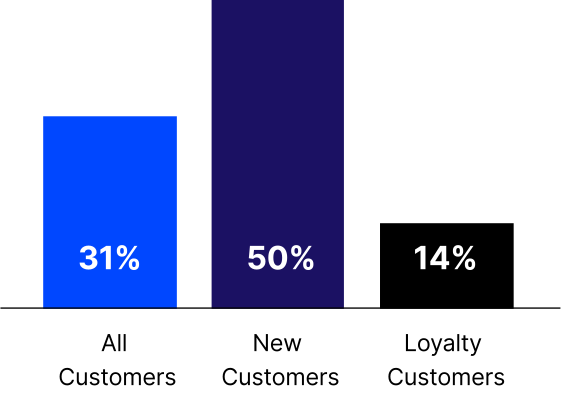
Most grocers’ retention buckets are leakier than they think.
For grocers, 31% of their customers in a given month will churn — even more so for new customers. Loyalty programming helps, but significant churn risks remain.
- 31% of all customers shopping in a given month won't be back that year
- 50% of new customers shopping in their first month won't be back that year
- 14% of loyalty members shopping in a given month won't be back that year

Restaurant
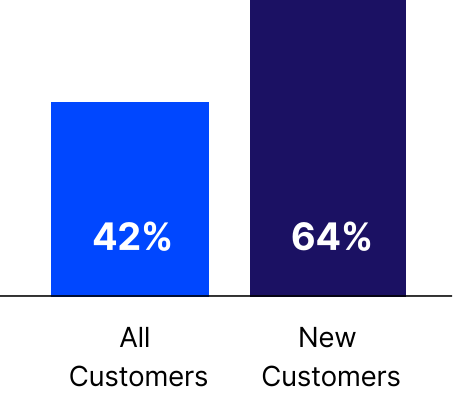
Most restaurants’ retention buckets are leakier than they think.
For restaurant retailers, 42% of their customers in a given month will churn — even more so for new customers.
- 42% of all customers shopping in a given month won't be back that year
- 64% of new customers shopping in their first month won't be back that year

Fuel
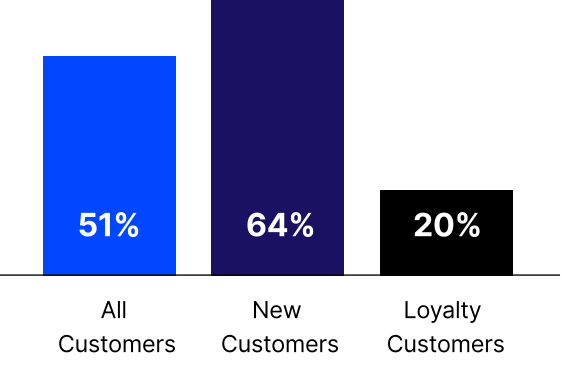
Most fuel retailers’ retention buckets are leakier than they think.
For fuel retailers, 51% of their customers in a given month will churn — even more so for new customers. Loyalty programming helps, but significant churn risks remain.
- 51% of all customers shopping in a given month won't be back that year
- 64% of new customers shopping in their first month won't be back that year
- 20% of loyalty members shopping in a given month won't be back that year
3–4
other loyalty programs in each everyday spend category compete for each consumer’s attention.
New data reveals the key to higher retention rates.
Retained customers spend at higher levels than new customers
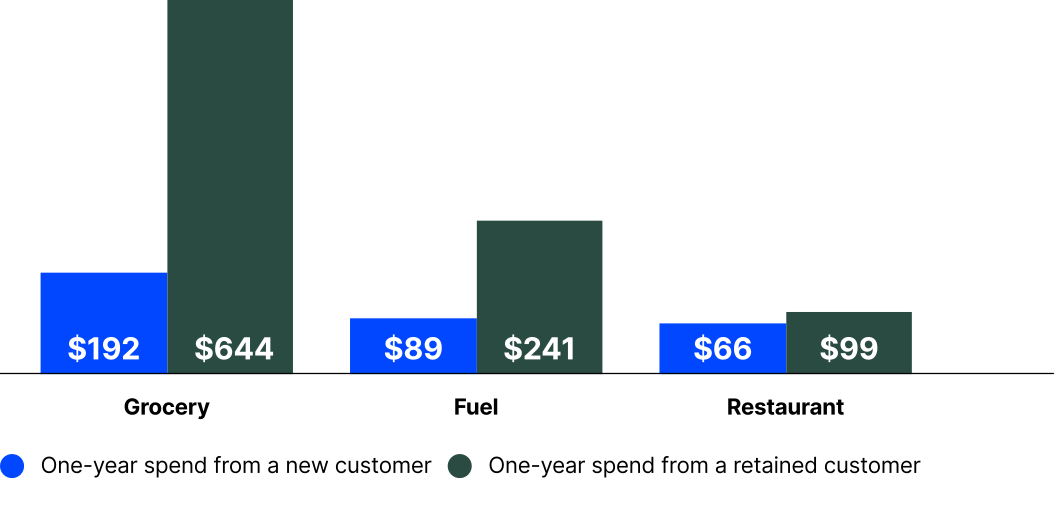
Source: Upside transaction data from 7.7 million customers at 335 grocery stores, 2,254 fuel stations, and 1,498 restaurants from March 2022 to February 2025.
Key takeaway
Customer retention is about building habits, visit by visit. Our research shows regular grocery customers are 46 percentage points more likely than new customers to stick around after a year — and that compounds over time.


