




What we cover

A restaurant can have millions of loyalty members and still struggle to fill tables on a slow Tuesday.
Loyalty still works in restaurants. A program that earns an extra visit a month is worth a lot in a business this sensitive to frequency. The catch is that nearly every chain now runs a version of the same thing (an app, tiered rewards, a subscription, the occasional drop), so the programs have started to blur together, competing on sign-ups more than on anything a guest would notice.
That tension runs through Escaping the Loyalty Plateau, Upside's 2026 study of more than 12,000 consumers and retailers across fuel, grocery, and restaurant. Enrollment keeps climbing across the category, the report shows, while its hold on behavior loosens.
Soft traffic just brings that gap to the surface, and with it, a real chance to do something about it.
Same app, same drops, same plateau
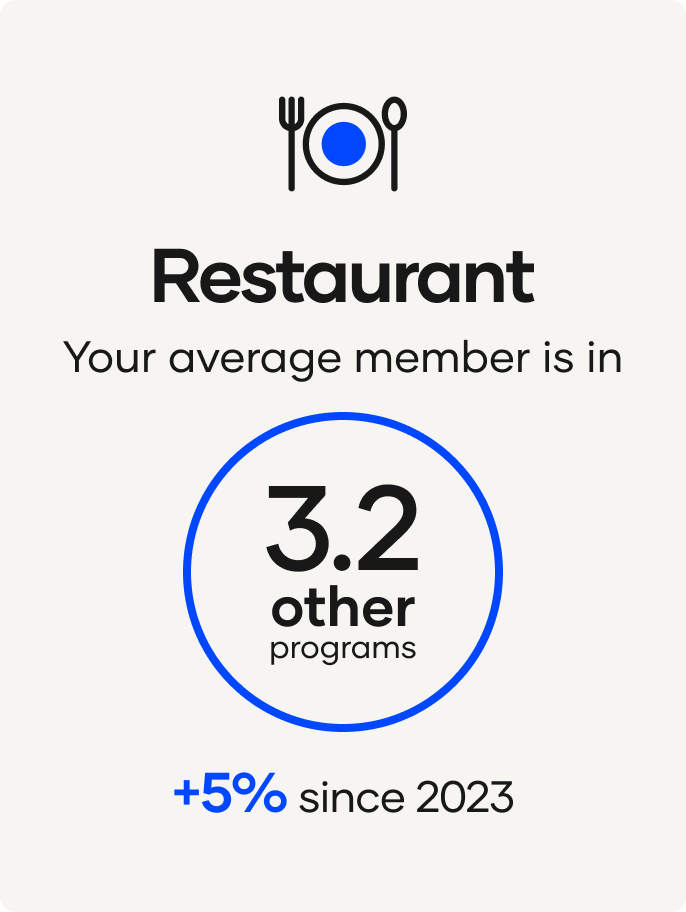
Restaurant chains have spent years adding perks: lower reward thresholds, flexible redemption, limited-time drops. The result is a wall of programs that look quite similar, and often measured by sign-ups rather than true incremental impact. The numbers say as much. 86% of consumers say loyalty rewards matter to them, yet only 38% use a restaurant program regularly, and the average member belongs to 3.2 other restaurant programs at once.
That overlap is the loyalty plateau: enrollment climbs while a program's pull on behavior loosens. It shows up in busy seasons too, but soft traffic puts a spotlight on it. When guests trade down, stretch the time between visits, and get choosier about which occasions are worth it, a program that wasn't really moving behavior has a hard time hiding it.
A database full of members is the starting point — the next visit is what proves the program's working..
Loyalty's job is shifting to the next visit
Operators feel this, which is why loyalty's role is changing. Brands are leaning on personalized offers, bonus structures, event-style drops, and in-store activation, working to turn loyalty into an engine for frequency, retention, and habit rather than a points bank.
The research shows where that pays off. Restaurant loyalty is good at lifting repeat visits, recommendations, and frequency, and much weaker at growing total spend. So the goal is moving: from rewarding an order a guest was already going to make toward influencing the next dining decision.
The opportunity lives in that next decision: the one a guest hasn't made yet.
Breaking the plateau means reaching beyond the app
Breaking out starts with who a program is trying to move. The biggest opportunity is the persuadable middle: guests who like a brand, want value, and are still deciding where their next meal comes from. They are the largest, most movable group, and a program built for everyone tends to pass them by.
Reaching them is where a marketplace earns its place. A restaurant's own app only reaches guests who already use it, while a marketplace meets them where they are, in the moments they're choosing where to eat, outside of any single brand's app. That’s the moment a loyalty program isn’t built to reach on its own.
Paired with sharper, more relevant offers, that reach turns into retention. Across billions of transactions through Upside, restaurants in a marketplace hold onto guests better than those running a program alone. Loyalty and Upside each cut churn independently, and together they cut a guest's first-month churn by more than 30 percentage points.
From members to regulars
When every chain runs a similar program, what sets a brand apart is how many guests it can actually move. Relevant value deepens the guests a restaurant already has, and a marketplace brings in the ones still deciding. That is how a loyalty program grows from a database of members into a roster of regulars.
Get your copy of Escaping the Loyalty Plateau
Upside's newest report covers the full picture, including the customer segments most ready to be moved and the retention data behind the marketplace effect.



Request a demo
Request a demo of our platform with no obligation. Our team of industry experts will reach out to learn more about your unique business needs.


