




What we cover

The 2026 midterm elections brought a considerable shift of power between political parties. Voters said the issue they cared about most was affordability, an issue encapsulated for many by the price of gas.
Gas prices tend to be a barometer of customer sentiment because, for most households, gas is an essential good. Gas prices are also very salient because they’re displayed in four-foot-high numbers around town.
But were gas prices for everyday Americans really that much larger relative to last year?
In short, yes.
Last month’s data
Prices dip, retailers breathe after rocky September
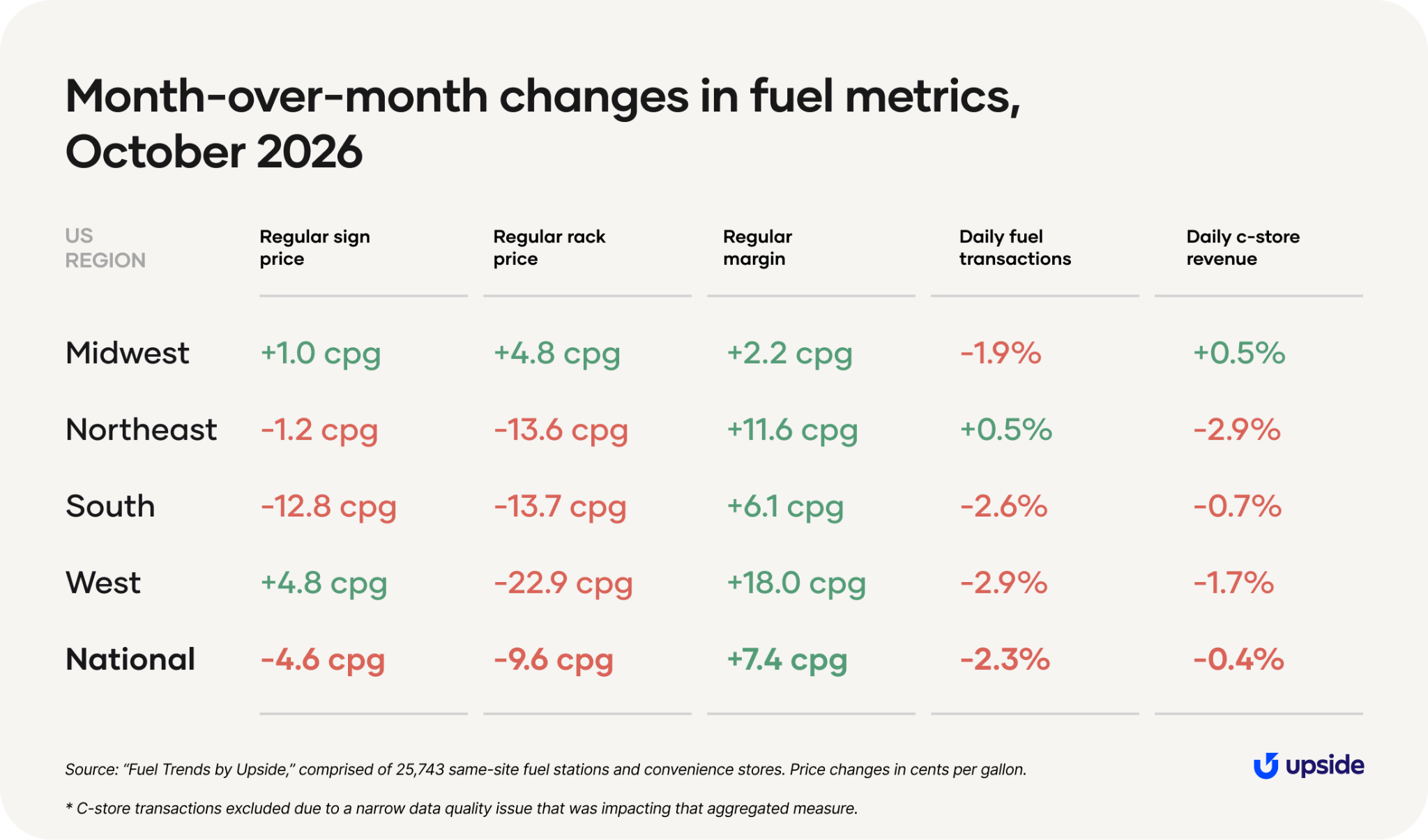
Despite oil prices rising 4.9% in October 2026, most stations saw relief in their rack prices. The average American station saw a 9.6-cent drop in the price it paid for a regular gallon. This was largely due to lower refining margins, which we’ll return to later on.
The average American consumer also received price relief, with regular sign prices dipping by 4.6 cents. The South played a large role here, as prices in that region dipped by nearly 13 cents month-over-month.
With rack prices declining more than sign prices, the average profit margin on a gallon of regular-grade fuel per US station increased by a bit more than 7 cents. During normal times, this would represent a large increase in margin for retailers. However, we’re in a period of high volatility — and this gain roughly cancels out the 6.8-cent-per-gallon drop that we saw last month.
With colder weather blowing in, we also saw month-over-month dips in foot traffic in October. Business was sluggish both at the pump and inside the store. Fuel trips were down about 2% month-over-month; compared to August, c-store trips were down nearly 4%. (Due to a narrow data quality issue from September, we don't have reliable month-over-month values here.)
But prices dominate the headlines, and they may have been pivotal in driving voter turnout during American elections earlier this month. Though prices dipped a bit in October, they are still considerably higher than normal for this time of year.
The elevated gas prices shaping consumer sentiment
The chart below compares regular gas prices in 2025 and 2026. At the start of 2026, a regular gallon was actually 7.8% cheaper year-over-year. After the United States launched its attack, the trend immediately reversed and remained higher through 2026.
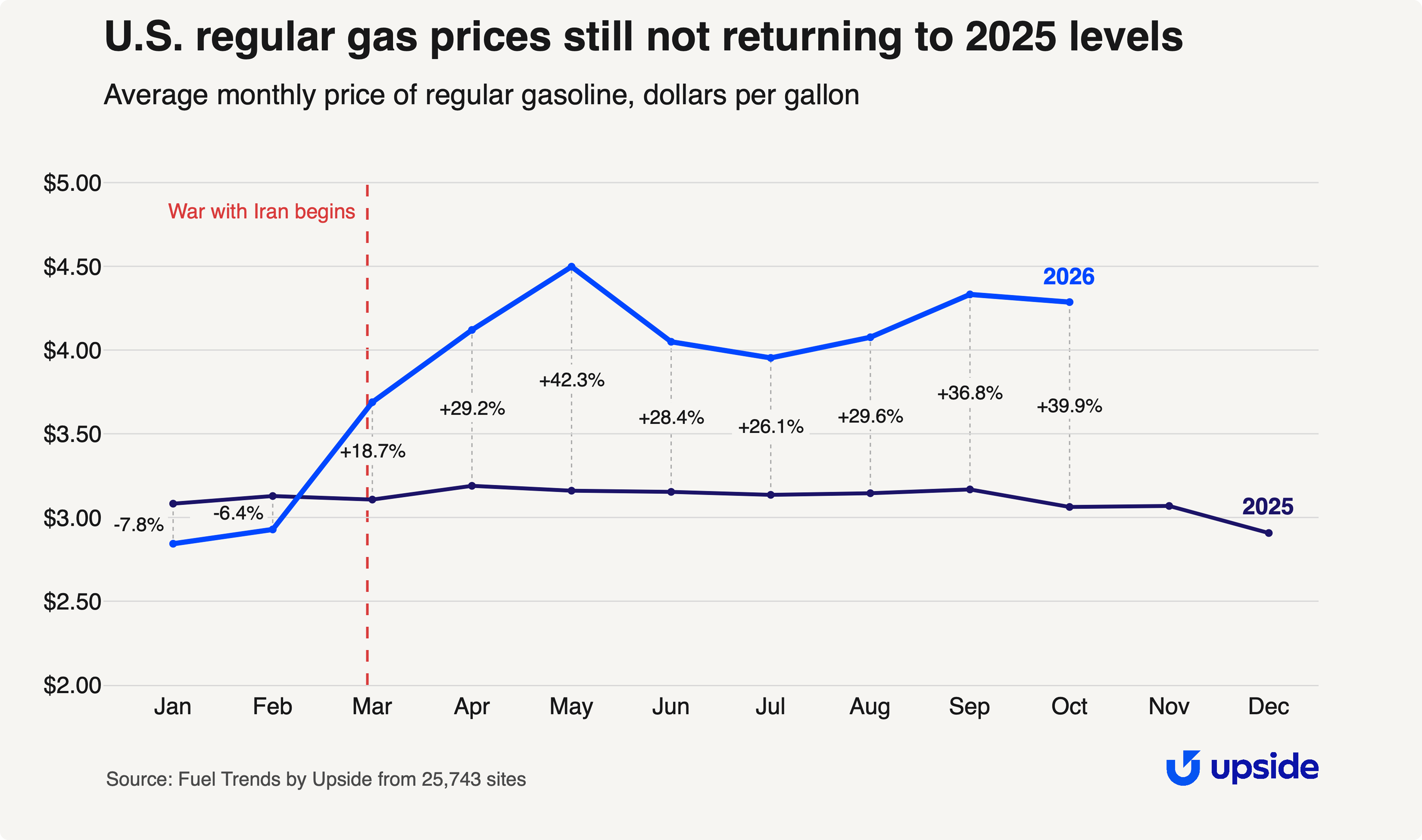
In October 2025, for example, the average U.S. station sold a gallon of regular for $3.06. But this past month, a regular gallon cost $4.29 — a 40% increase.
And this wasn’t a local phenomenon. Across the country, prices were at least a dollar per gallon higher this year than last.

Now, month-over-month, Americans did start to see a bit of relief. Remember that sign prices dipped about 5 cents per gallon in October. But at this time of year, prices generally fall by more than what we’re seeing right now. From September to October 2025, regular sign prices fell by 11 cents at the average station.
So, why the weak seasonal dip?
As we mentioned above, there was a rise in oil prices. West Texas Intermediate oil increased by 4.9% month-over-month due to an uptick in attacks in both the Persian Gulf and the Red Sea.
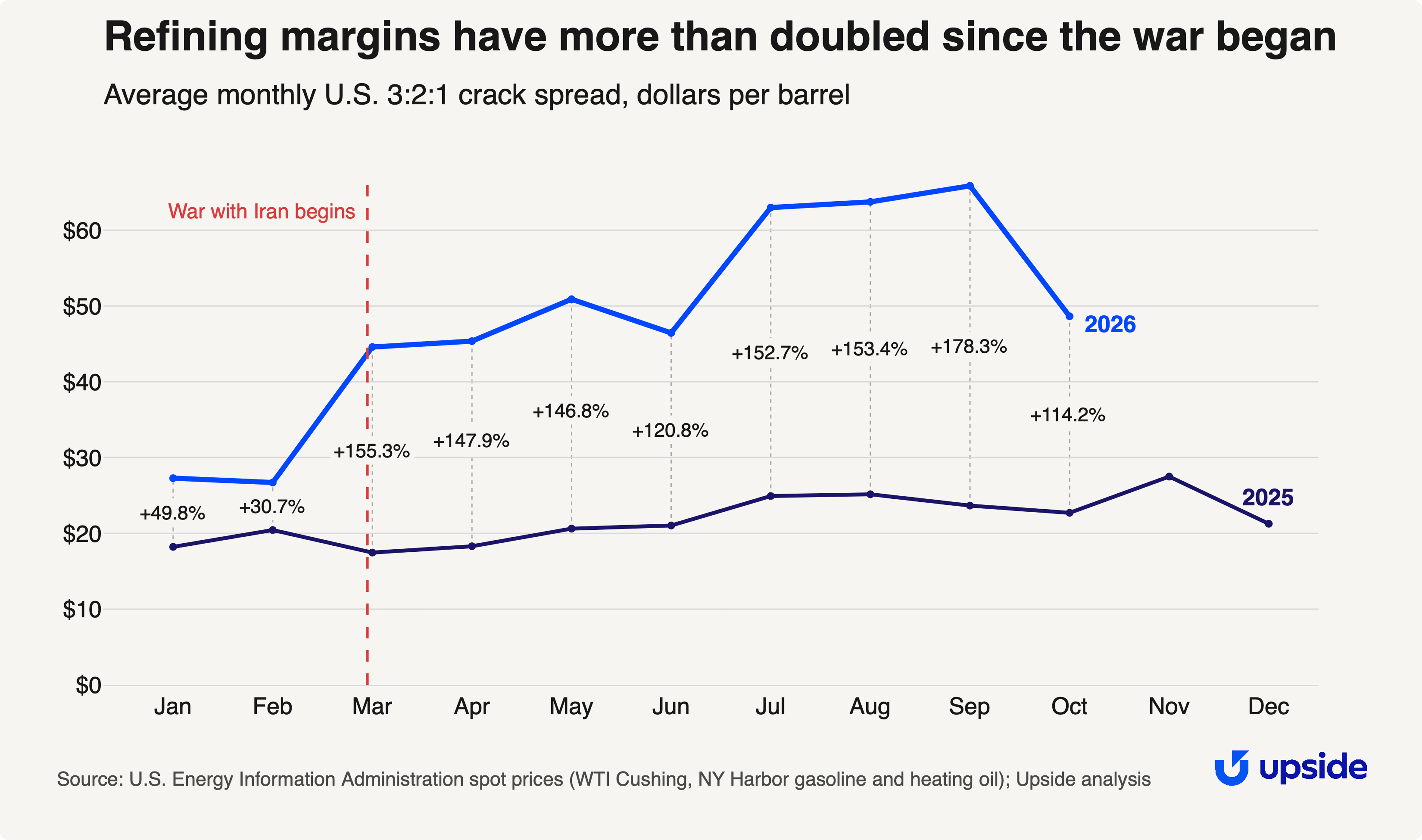
Another less obvious reason is the rapid increase in refining margins. They remain highly elevated compared to last year.
The chart below shows just how elevated. Using the popular measure of 3:2:1 crack spreads, we see that refining margins in October were 114% higher year-over-year.
These rising costs then get passed along the chain. Retailers pay higher rack prices, and drivers pay higher sign prices. Everyone feels upward pressure.
So, how did drivers respond to these higher prices? Gas is generally described as an inelastic good — one that most people have to purchase no matter its price. Overall, consumers were about to cut back on their gas purchases slightly. Some people told us they were driving less this year. But for the most part, they simply had to pay the higher prices.
The chart below shows that all-grade volume sales of gasoline at the average U.S. station were 4.7% lower in October 2026 than the previous year.

This shows that consumers are responding somewhat to price, but their response is not proportionate. If gas prices were elastic, we would see considerably less demand for fuel, given how large the price increases were.
These dynamics help to explain the low economic sentiment that shaped the 2026 midterm elections — and why the balance of power in Washington shifted so decisively.
Predictions and considerations
As weather cools, will tensions in the Middle East?
With the election behind us — one in which the American electorate sent a resounding message about affordability — we’re following how the election results might influence foreign policy toward the Middle East.
The only thing that will ease the fuel supply crisis and bring prices back to normal levels is a full, permanent re-opening of the Strait of Hormuz.
Potential (other) tailwinds:
1. We’re approaching the end of hurricane season, and it’s been a quiet one. “Super El Niño” warming of the sea surface temperature is making it harder for hurricanes to form over the Atlantic Ocean. The warmer temperatures could lower demand for heating oil this winter. That would in turn ease seasonal pressure on diesel, which is chemically very similar to heating oil.
2. Last month, a few fuel tax holidays went into effect across the country. These provided partial relief to consumers, and extending the holidays would continue to do so. However, these holidays are less likely to be renewed following the midterm elections.
Potential (other) headwinds:
1. When we enter the coldest months of the year, demand both inside the store and out at the forecourt tends to fall. Even if the transaction count increases due to high prices, volume might not follow suit.
Want a closer look at the data?
Check out our insights hub with all our fuel and convenience monthly updates.



Request a demo
Request a demo of our platform with no obligation. Our team of industry experts will reach out to learn more about your unique business needs.


