





What we cover

Inflation is far and away the biggest issue on c-store retailers' minds heading into 2027. In CSP's 2026 Outlook Survey, nearly 70% named inflation and consumer spending pressure among their most urgent issues, ahead of margin pressure and fuel volatility (48%) and labor costs (44%).
Those pressures framed CSP's recent webinar exploring the major themes from the 2026 Outlook Report. Convenience retail is at an inflection point — foodservice and other categories are growing fast, customer expectations are rising, and AI capabilities that seemed impossible a few years ago are now within your reach.
Those opportunities come with real headwinds, like declining tobacco sales and the K-shaped economy. Upside’s Dr. Thomas Weinandy said that strain is showing up at the pump. According to Upside data, gallons per transaction dropped as soon as the Strait of Hormuz crisis began and stayed low through the summer.
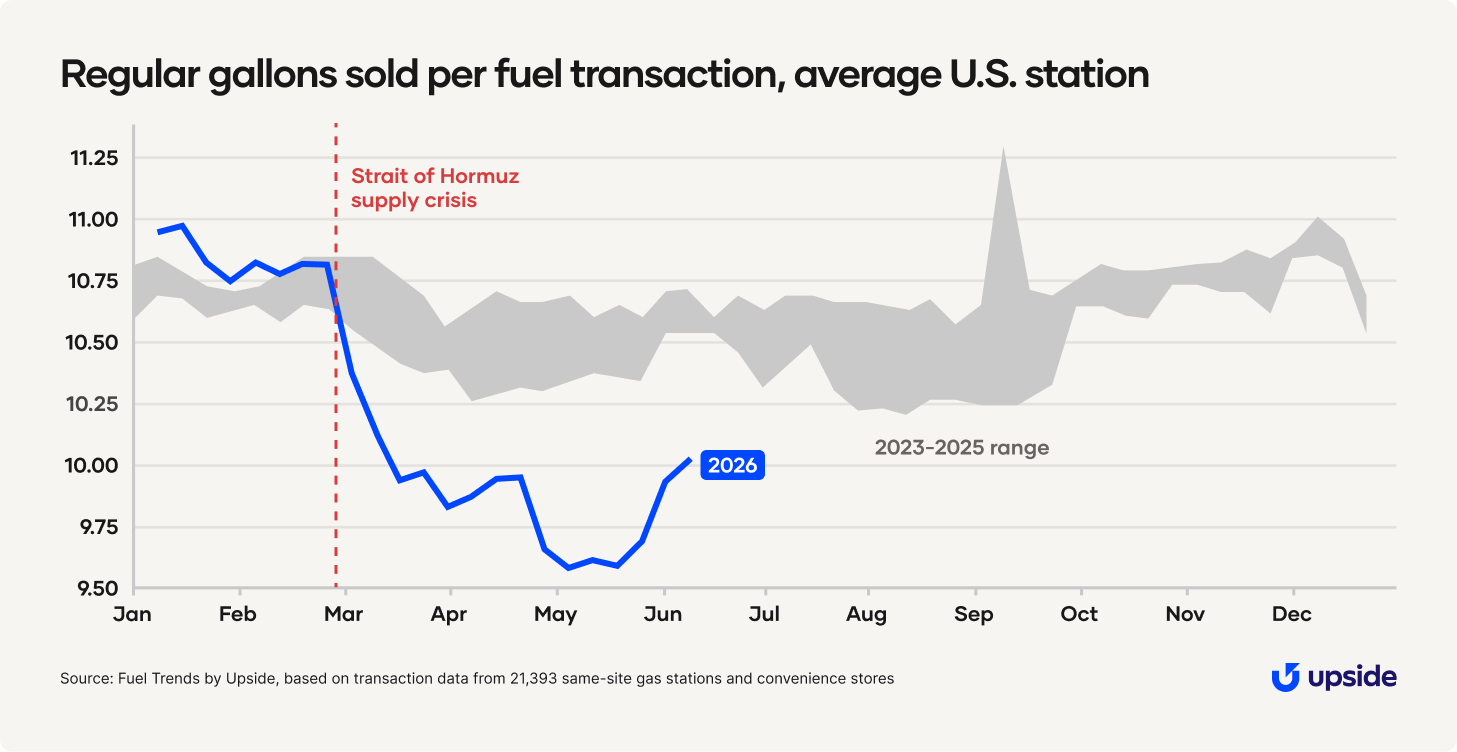
But total fuel demand held relatively steady, so your customers are visiting more often. "It's more shots on goal, more opportunities to win over these customers," he said.
To help you make the most of those visits, the report lays out outlooks for the industry. Watch the full webinar here, or read ahead for a preview of the panel’s recommendations
Owning the customer becomes the competitive advantage
Consumers have more choices than ever. The lines between c-stores, grocery, QSR, and other fuel sellers keep blurring, and cross-shopping is rising. Retailers have invested heavily in loyalty, but many still struggle to turn membership into long-term customer value.
The industry has made progress. NexChapter research found that more than 70% of CSP's top 202 retailers have a loyalty program. Consumers are engaging: Eric Ogrin of Patron Points shared that mobile app usage across his company’s retail partners rose 118% over the past six months, with app registrations up 67%. To him, that's a sign consumers are planning their trips and looking for value before they leave the house.
Nevertheless, a gap remains. "While we know a lot about the transaction, we know a lot less about our customer," said NexChapter CEO Art Sebastian. C-stores know what sold, at what price, and when. They know far less about the person who bought it.
What does owning the customer actually look like in 2027? Weinandy broke it into three steps:
1. Know your customer. "If you don't know how many of your customers at the forecourt have shopped inside the store as well, then you're not meeting that basic minimum rung," he said.
2. Reach your customer with an open line of communication.
3. Influence your customer. "You can know everything about your customer, but if you can't impact their buying decisions, then you can't really do that much with the information," he said.
He added an important caveat. "No one said owning your customer is being the only location that that customer shops at," Weinandy said. Customers visit multiple stations and belong to multiple loyalty programs at once. That doesn't stop you from reaching and influencing them.
The shift: Move beyond coupons and digital offers and start managing customer lifetime value. Unify everything you know about a customer — purchases, preferences, channel opt-ins, service interactions — into a single view.
Data becomes the retail operating system
C-store retailers aren't short on data. Between transaction logs, inventory, payments, labor, loyalty, and customer service, the industry generates nearly 2,000 consumer decisions every second. The problem is that the data sits in separate systems. "We're not short on data; we're short on connecting that data," Sebastian said.
Retailers know this area needs improvement. Loyalty and personalization topped the list of tech areas most in need of modernization (54%), followed by back-office and inventory systems (45%).
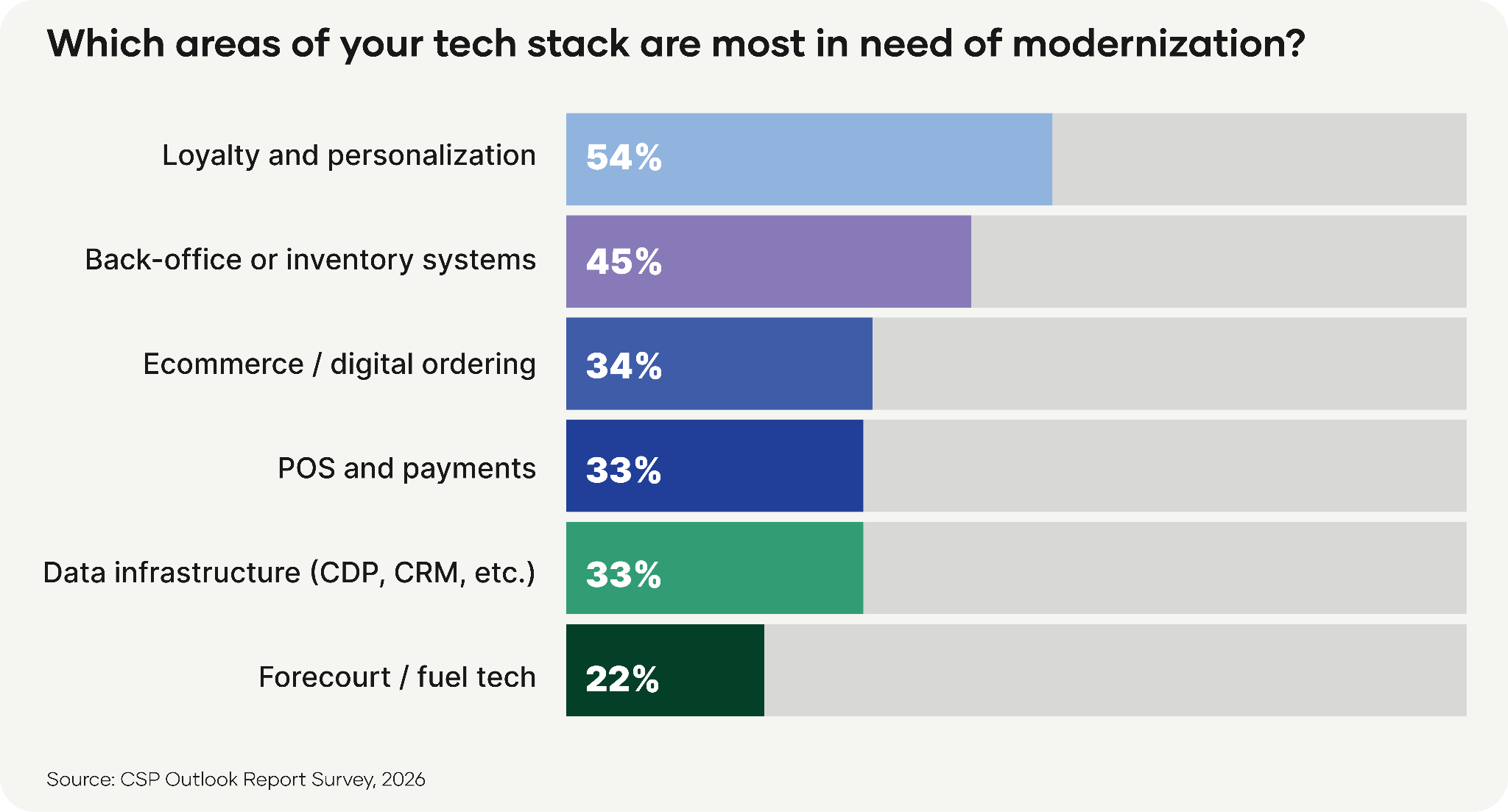
Asked where he'd put one incremental dollar in 2027, Weinandy said it depends on where you're starting. If you don't have a unified data platform yet, build it first. "If you think data is important today, imagine how valuable it's going to be in five or 10 years' time," he said.
After that, spend wherever the return is highest. That requires being able to answer one question: "Are we shifting customer behavior in a way that is truly incremental?"
Weinandy pushed back on chasing the lowest price on the corner. Flat, across-the-board loyalty offers, like 10 cents off every gallon, give away margin on trips you would have earned anyway. "We need to be able to protect margin, and I think personalization is one way to do that," he said.
For smaller operators who find all this overwhelming, Ogrin suggested starting with an hour instead of a dollar. Set aside an hour a week, pick one question you want answered — like how a single promotion performed — and work from there.
The shift: Treat connected customer data as foundational infrastructure, not another technology project to deprioritize. The goal is a trusted, governed data system that every team — from marketing to merchandising to store operations — can use with confidence.
Talent and operating models become the ultimate differentiators
"Ten years ago we were wishing we had technology," Sebastian said. "Five years ago the technology was arriving. Fast forward to today, the technology is outpacing us."
Retailers report their biggest talent gaps lie in technology-related capabilities: specifically, AI (38%) and loyalty and CRM (34%). There's good news, too: retailers say they're moving from idea to pilot faster than last year, with more than half doing it in six months or less.
Even so, retailers still hit roadblocks, and money isn't the main one. Asked what slows innovation, nearly half pointed to competing priorities and nearly four in 10 to legacy systems. Both issues stem from how the organization is set up to work. New capabilities require new skills, roles, and ways of working across both corporate teams and store operations. Retailers that invest in talent and organizational design will be better positioned to execute and scale.
Ogrin reminded smaller operators that this isn't only for large organizations. In many c-stores, marketing, operations, and data all come down to one person: the owner. "You don't have to have a large team," he said. "But that doesn't mean that you can't participate."
The shift: Move from buying technology to building organizational capability. That means recruiting the right talent, designing how teams work together, and building AI, data, and digital skills across every function — not just marketing and operations, but also merchandising, accounting, and legal.
Get more industry data
Each month, Upside publishes unique insights based on the largest single dashboard of fuel and c-store industry data in America. Dig into the state of retail fuel with data from 20,000+ stations and expert commentary from economists and industry veterans.
Subscribe for free to have Fuel Trends by Upside sent straight to your inbox.



Request a demo
Request a demo of our platform with no obligation. Our team of industry experts will reach out to learn more about your unique business needs.


