




What we cover

Inflation, digital habits, and shrinking brand loyalty have rewritten how drivers choose where to fill up. And now, the same shift that put your customers in play is creating an opportunity for incremental growth.
We dug into real transaction data along with survey responses from consumers of a major fuel brand across three large American markets. With those insights, we map the modern fuel journey and what it means for your business.
Drivers decide where to go before they ever hit the road
More than 70% of our survey respondents cite inflation as an ongoing stressor. That budget pressure has pushed drivers to adopt new habits that stretch their dollars further.
That includes the way that consumers decide where to refuel. Today, the choice is made before a driver even plans their trip. The phone — not the street sign — is what influences the decision.
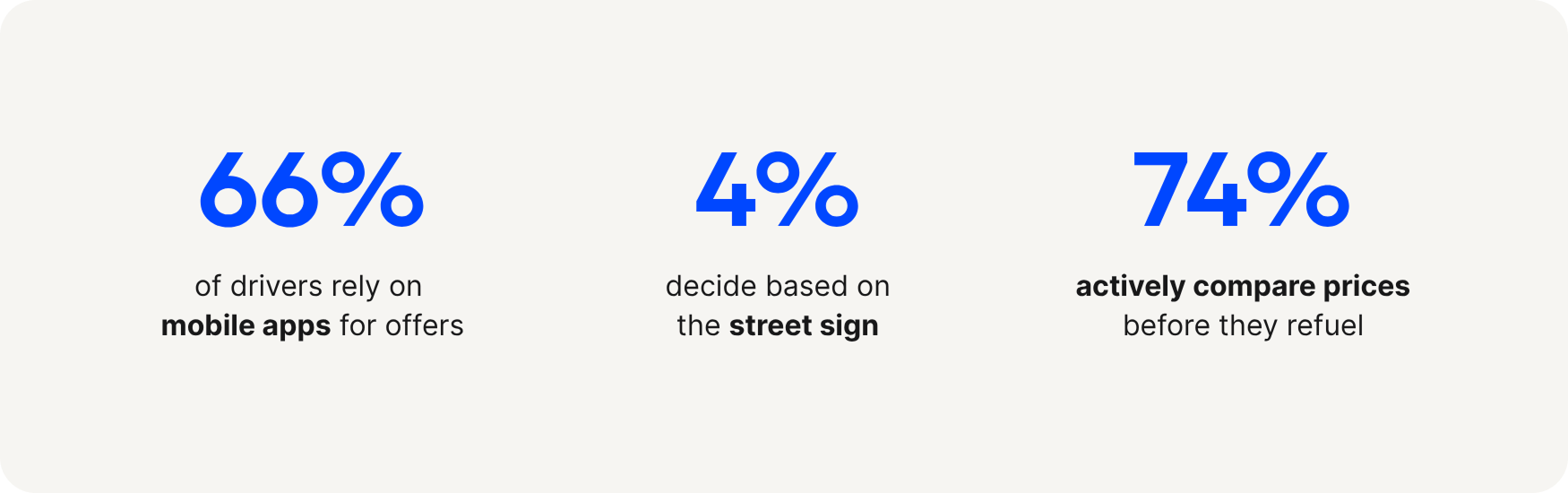
The takeaway: Cost-sensitive drivers are price-checking using digital tools to decide where to shop. For retailers, the mobile phone is the new premium corner lot.
Winning the uncommitted customer: Brand is a tiebreaker, personalized offers are differentiators
These price-sensitive, digital, and opportunistic customers are what we’d call uncommitted — prioritizing their own needs over brand loyalty. Though they’ve always existed, uncommitted customers now make up 74% of fuel consumers nationwide.
Even if uncommitted customers have preferences, most of them will abandon those preferences if they receive the right offer to switch. When we asked drivers how much brand matters to them, the picture was clear: only 27% of them said that it matters “a lot.”
In that way, brand equity still matters, but it’s not the thing that sets a retailer apart. Rather, it can break a tie between two close options.
So, what does sway an uncommitted customer? Offers and incentives help to increase foot traffic, but it’s important to question whether they lead to truly incremental revenue. Are you changing behavior, or subsidizing a sale that would have happened anyway?
Drivers are weighing whether a detour is “worth it.” To win the transaction, you need to clear the meaningful threshold: the point where acting differently feels worth it to the uncommitted customer.
In our survey, we asked drivers directly: what kind of offer would be meaningful enough to change your routine?
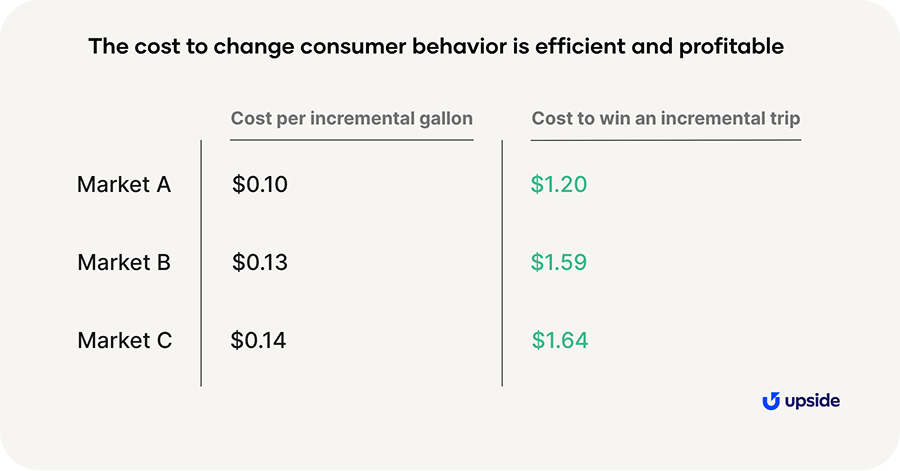
Across all three markets in our analysis, drivers consistently agreed that a personalized offer in the range of 10- to 14 cents per gallon is enough to change their routine. To get it, they’ll go up to three miles — about five to seven minutes — out of their way.
The transaction data backs this up. When we look at the real cost per incremental gallon, it lines up almost perfectly with what drivers told us: right in that sweet spot between 10 cents and 14 cents per gallon. Across a full fill-up, that adds up to between $1.20 and $1.64 to win a trip from a competitor.
But a one-size-fits-all discount destroys valuable margin. A loyalist requires a much smaller incentive to maintain their habit, while a net-new driver requires a higher offer to break their routine and visit your station.
The takeaway: When offers are personalized and tied to incremental gallons — trips you win from a competitor — funding that reward is both efficient and profitable. Because personalization sharpens as behavior changes, it gets more efficient over time.
Where consumer reality and retailer strategy have drifted apart
In the market today, drivers and retailers are focused on different things — but aligning with trends in consumer behavior can help fuel retailers earn more profit and grow their business.
Bridge the inflation gap
We’ve already highlighted the strain that inflation has put on American consumers. In our survey, seven in 10 respondents said they would bypass a convenient station for one with a better incentive. The average fuel loyalty member now juggles three or more programs to stretch their dollars.
Meanwhile, our survey of retailers shows that their top goal in 2026 is to reduce their costs. When asked to rank priorities, retailers placed customer acquisition and loyalty dead last.
This makes sense, because inflation can affect retailers just as it does consumers. But with consumer trips more up-for-grabs than ever, retailers shouldn’t just play defense and take their eyes off the consumer.
The discovery disconnect
The way drivers discover new stations and the way most retailers are trying to reach them are not properly aligned.
Our survey showed that most drivers discovered a new station on their phone before their trip started. If they joined a loyalty program, it largely happened on-site — at the pump or the register, after the trip was already underway.
Meanwhile, we’re seeing investments from the retailer side that don’t support this reality. They’re holding their digital marketing budgets steady while the efficiency of those dollars slips.
In our survey, 85% reported flat or declining returns from their marketing spend.
The fix isn’t a bigger budget. It’s shifting spend toward the digital spaces where drivers actually make their choice. Leverage third-party marketplaces to intercept drivers before they route their trips.
The frequency divide
Uncommitted drivers don’t visit any specific brand as often as loyalists. Yet, they still account for about 34% of your revenue. Winning just one more trip per month from this group can increase a retailer's revenue by up to 88%.
Most retailers believe they know how to win these customers. And the best way to measure whether they’re actually doing that is by increasing lifetime value. That’s a task that usually falls on a loyalty program — but when we asked retailers to rank where their programs are most effective, increasing customer LTV came in last.
The ambition is there, but the approach is missing the mark.
3 takeaways for winning the uncommitted driver
The path forward isn’t about outspending your competition. It’s about engaging with drivers earlier with relevant offers to entice them while still protecting your margin.
For fuel retailers, three moves matter most:
- Intercept the route. Capture drivers on digital channels before the trip even starts — where two-thirds of them are already deciding.
- Defend the margin. Neutralize competitive threats with targeted, personalized, digital offers that are sized to stay within your margins.
- Win the next trip. Use immediate, stackable rewards to trigger the behavioral shift that turns a one-time visit into a habit.
The drivers reshaping your market are more in play than ever. They’ve told us exactly what moves them, how far they’ll go for it, and where they’re looking when they decide.
The retailers who meet with the right offer at the right moment will turn today's uncommitted driver into tomorrow’s most valuable customer.
Curious how Upside helps fuel retailers reach these drivers and prove the profit on every incremental trip?
Get in touch to see what the modern fuel journey looks like in your market.


Request a demo
Request a demo of our platform with no obligation. Our team of industry experts will reach out to learn more about your unique business needs.


