




What we cover

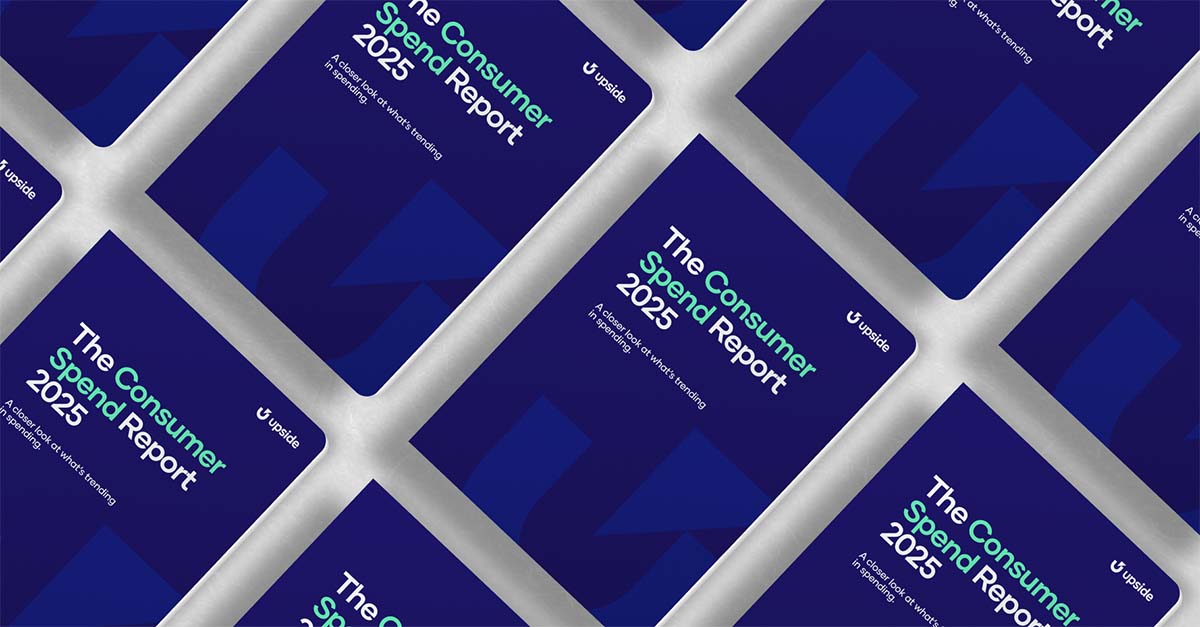
Upside’s inaugural Consumer Spend Report, in 2024, uncovered the rise of the uncommitted shopper. With the 2025 edition, we take our most comprehensive look yet at how Americans are choosing where, when, and how to spend — and find that consumers’ uncommitted behavior has increased year over year.
Drawing from over 10 billion transactions plus thousands of consumer and retailer survey responses, the report shows that consumers are more fragmented, more price-sensitive, and more value-driven than ever before.
But what’s driving this shift?
The data points to three market pressures that, together, are reinforcing uncommitted behavior across every retail category:
- Tariffs are pushing prices higher and forcing consumers to adapt
- Lingering cost fatigue continues to erode purchasing power
- Income divergence is widening, creating a split in spending patterns
Here’s a preview of how those pressures are shaping consumer behavior today — and why they matter for 2026.
Download the report now.
Tariffs are triggering adaptive value-seeking
In 2025, tariff uncertainty re-introduced cost volatility into everyday essentials. 79% of consumers say they’ve changed their behavior because of tariff-driven price increases, and many are responding by delaying purchases, switching stores, buying in bulk, or turning to cheaper substitutes.
These adjustments have created an environment where value is assessed one transaction at a time — a core driver of uncommitted behavior.
Cost fatigue is deepening price sensitivity
Even outside of tariff impacts, consumers continue to face elevated prices and persistent cost pressure. Nearly half (49%) of Americans say the economy is getting worse, with many reporting that essentials feel more expensive than ever.
As a result, shoppers are becoming more deliberate:
- Trading down from name brands to generics
- Switching retailers to find lower prices
- Comparing prices more frequently
These behaviors create more fragmented spending — and increase the likelihood that shoppers will shift stores from one transaction to the next.
Income divergence is splitting the shopper landscape
One of the most revealing findings in the report is the growing divide between higher- and lower-income consumers.
Lower-income households are cutting back in every category. Many are driving less, reducing basket sizes, and relying more on promotions. Higher-income households, meanwhile, express more optimism — yet even they are becoming more selective and value-conscious.
This “K-shaped economy” reinforces uncommitted behavior among both groups, albeit for different reasons:
- Lower-income shoppers are forced to stretch their dollars further
- Higher-income shoppers are increasingly mindful of maximizing value
The outcome is the same: more switching, more fragmentation, and more pressure on retailers to win each trip.
A shopper who is harder to hold (and more important to understand)
Together, tariffs, cost fatigue, and income divergence have created the conditions for uncommitted behavior to become even more entrenched in 2025.
Consumers are visiting more stores, spreading their spend across more brands, and evaluating value with every purchase. Understanding these pressures is essential for retailers seeking to retain customers and grow profitably in 2026.
Get the full analysis in The Consumer Spend Report 2025.




Request a demo
Request a demo of our platform with no obligation. Our team of industry experts will reach out to learn more about your unique business needs.


