





What we cover

Across industries, loyalty leaders are working in dashboards that look healthier than the business results suggest. Enrollment numbers keep climbing. Redemption holds steady. New members come in faster than old ones drop off.
And somewhere in the same quarter, incremental sales sit flat.
The data underneath explains why. The average American consumer carries 17 loyalty memberships.
- In grocery, 82% belong to at least one program and average 3.4 memberships, up 47% in two years
- In fuel and convenience, members hold 3.3 memberships, up 26% in two years.
- In restaurants, the number is 4.2.
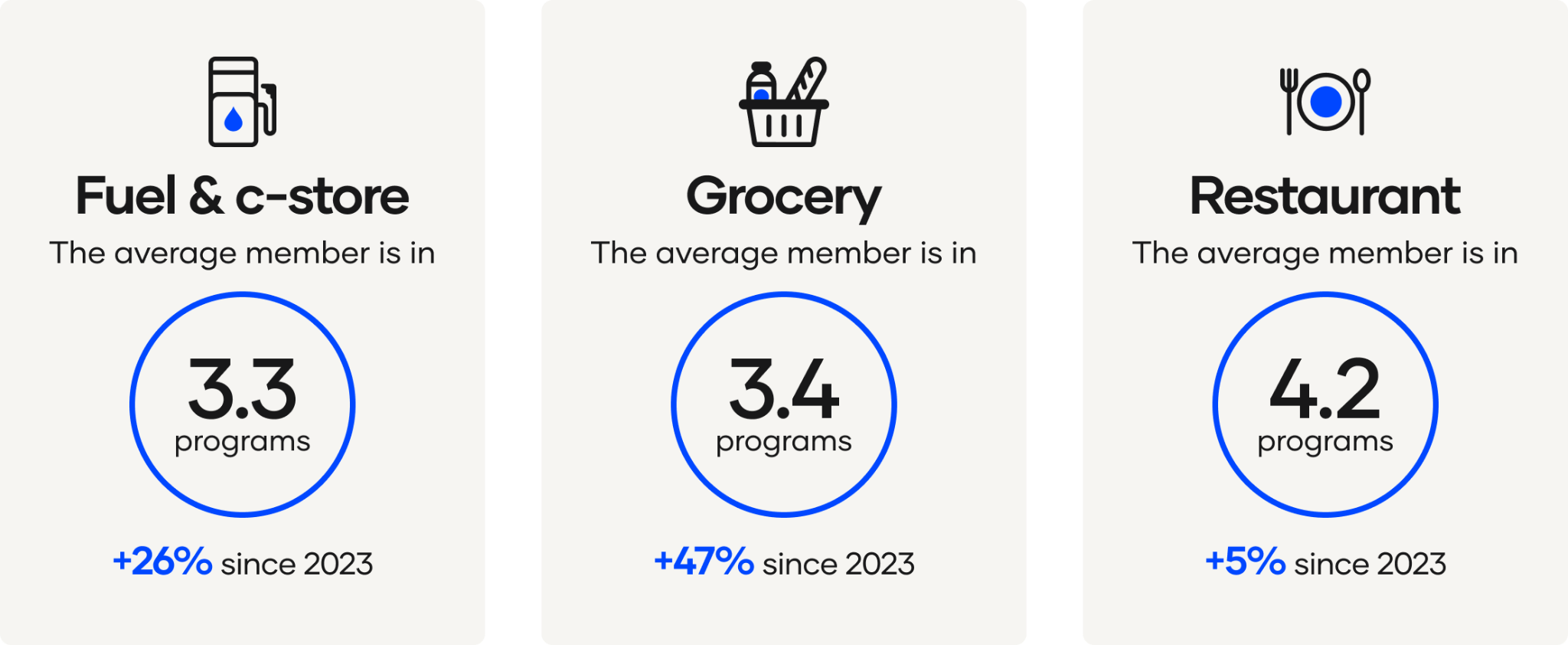
What does this mean? The "loyal" customer in your loyalty program belongs to your competitors' loyalty program too.
Joining a loyalty program doesn't necessarily drive loyal behavior
When American Airlines launched AAdvantage in 1981, miles were a competitive weapon. A million consumers joined within a year — twice what the airline expected. Within months, every airline followed. Then every grocer, every fuel retailer, every restaurant chain, eventually every drugstore.
The lifecycle has repeated itself across retail ever since. What started as a way to set one brand apart has become the price of staying in the conversation. According to the Bond Loyalty Report, only about half of the programs consumers belong to actually get used.
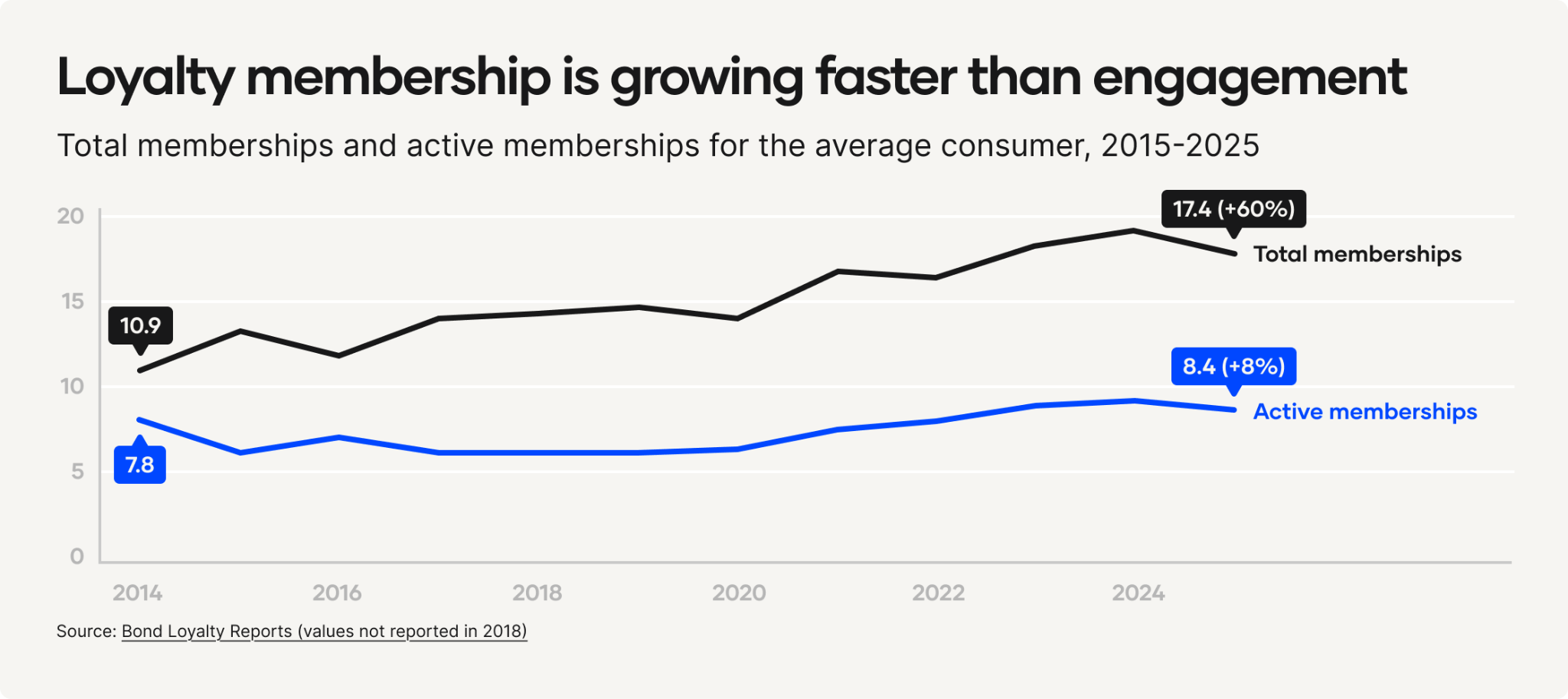
This is what saturation looks like in practice. Membership stopped being a sign of true engagement years ago.
These days, it mostly tells you a consumer didn't say no.
Yes, they're in your loyalty program — and your competitors'
Most loyalty teams across the industry are still gauging success largely based on enrollment numbers. Total members, new sign-ups, growth versus last quarter. The numbers go up, and going up feels like progress.
Growth in loyalty programs in a saturated category records sign-ups without pulling consumers toward any one brand. The barrier to entry is essentially a phone number at checkout, and maybe an app download. Opting in says very little about a consumer's actual intent. When members in a category hold two or three competing memberships at once, enrollment numbers are taking credit for behavior the program isn't driving.
That's why the most loyal-looking customer (high frequency, high enrollment, high redemption) is often “loyal” to three of your closest competitors at the same time. The signal in those member counts is mostly category-wide reflex. When every brand offers a program, almost everyone joins one.
If enrollment isn't loyalty, then what?
Loyalty matters. True loyal customers visit more often than the average shopper, spend more per visit, and bring in new customers through their recommendations. They're the ones who stick around even when a competitor cuts prices, and they come back even after a bad experience. That kind of loyalty is some of the most valuable behavior a retailer can earn.
So loyalty is worth chasing — absolutely.
But belonging to a loyalty program isn't the same thing as being loyal to the brand running it. Most of the members on the roster shop the competition with the same enthusiasm. The enrollment number captures the relationship retailers want with their customers. The behavior data doesn't always confirm it.
So what does a retailer do with a loyalty program that looks great on paper but isn't actually driving loyalty?
Start by asking the right questions.
- What is the program actually changing in customer behavior?
- How much of what shows up in the redemption data would have happened anyway?
- Which customers are responding to the program, and which are just collecting from it?
Loyalty programs are still important. They can win trips and build positive customer sentiment. But something more is needed: something that complements your existing loyalty program, drives true behavioral change, and helps you close the gap between enrollment and real loyalty.
Get your copy of Upside's report, Escaping the Loyalty Plateau
Upside's newest report goes deeper on the dynamics behind loyalty saturation and what retailers are doing to break through the plateau.




Request a demo
Request a demo of our platform with no obligation. Our team of industry experts will reach out to learn more about your unique business needs.


