




What we cover

Between colder weather and a reduction in commuting traffic over the Thanksgiving holidays, November is traditionally a slower month for fuel and c-store retailers. That largely bore out in 2025, with transactions inside and outside the store seeing expected declines.
The most important development from this month, however, was that regular fuel prices fell below $3 per gallon and reached their lowest levels since 2021. We dug into our data to explore why that benchmark matters and what it might indicate about prices as we turn the calendar to 2026.
Last month’s data
Steady average prices mask fluctuations by region
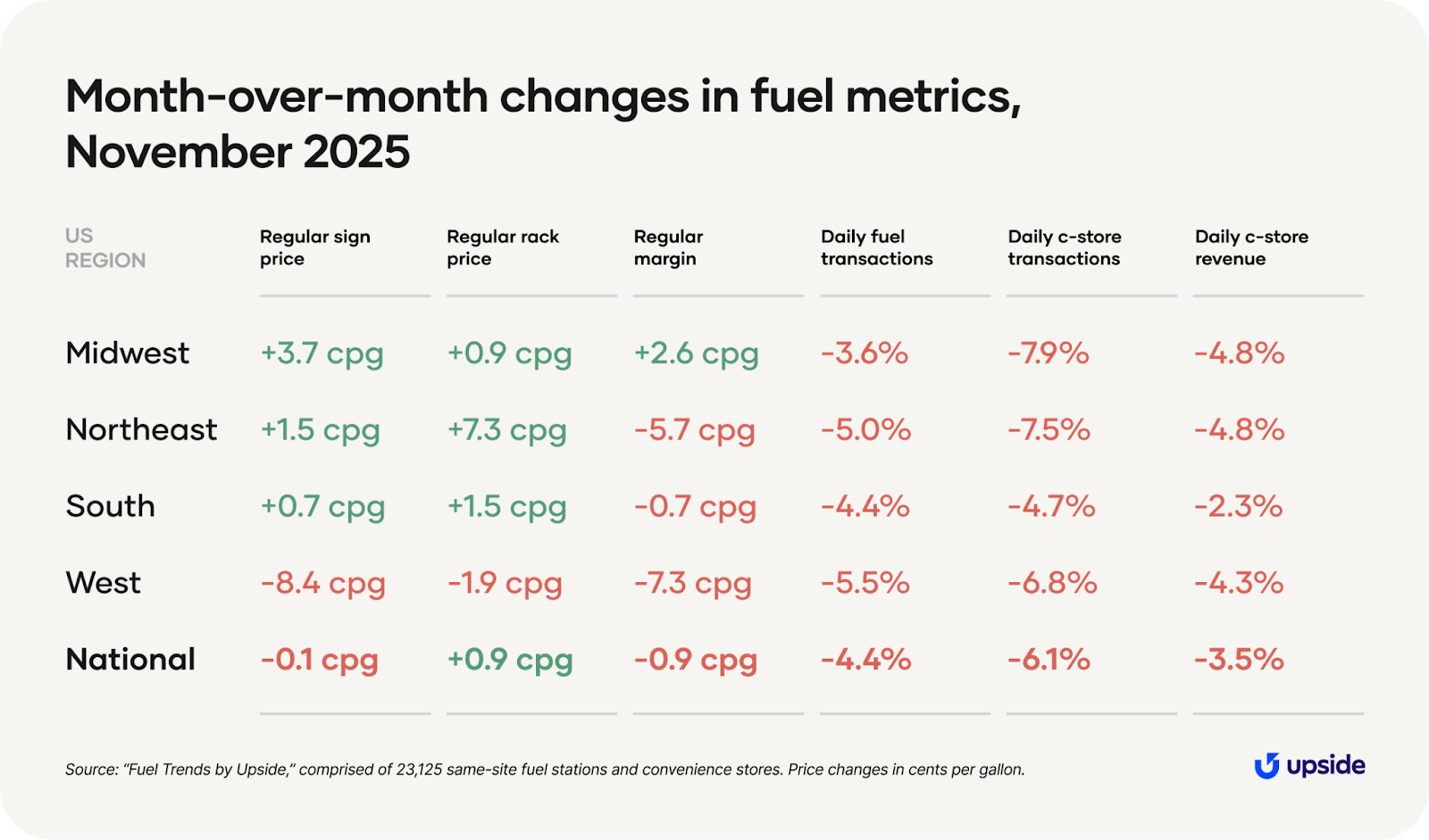
Across America, we see that fuel prices at the average station remained stable from October to November 2025. Overall, the national average sign price for a gallon of regular gas only dropped a fraction of a cent. This is due to soft demand for fuel, lower seasonal travel, and relatively cheap crude oil.
However, that average is hiding some interesting changes in individual regions. The largest drop in sign price came from the West — sign prices fell almost 9 cents per gallon despite rack prices only decreasing by about 2 cents per gallon.
Two factors behind these drops were foreshadowed in our September 2025 recap. First, the last of the seasonal switch-overs to winter-blend fuel happened in southern California after October 31st. Second, the Olympic pipeline — which supplies fuel to the Pacific Northwest — reopened following another unexpected outage, increasing supply and decreasing prices in Oregon and Washington.
Meanwhile, regular rack prices increased by about a cent per gallon at the average station, and that change was met by an equal and opposite decrease in margin. Again, these small changes at the national level hide some of the wider regional shifts.
In terms of demand, we see a lot of red on that table — the average gas station saw a 4.4% decrease in fuel visits and an even larger 6.1% decrease in convenience store visits. But that’s expected this time of year. As the temperature drops, so does demand.
One interesting note is that it seems the decline in c-store foot traffic was from lower-spending customers. We can make that presumption because c-store revenue did not fall by nearly as much month-over-month — only a 3.5% drop nationally.
Regular gas prices hit their lowest mark since 2021
In November, the biggest story in fuel was that prices dipped below $3 per gallon nationally. The combined effects of lower fuel demand, higher refinery utilization rates, and cheaper crude oil meant that prices reached their lowest levels of the past four years — numbers we haven’t seen since before Russia’s 2022 invasion of Ukraine. The milestone did not go unnoticed, with national coverage by CNBC, CNN, and Fox News, among others.
Upside’s data also shows record-setting low sign prices in November, especially at the end of the month, but this is not the first time in the past few years we saw regular sign prices dip below that $3 benchmark.
As shown below, the average station across the United States briefly dipped below $3 for a gallon of regular gas eight times in the last two years. The most recent dip is indeed the lowest, though, reaching $2.94 per gallon on November 30, 2025. That’s the last observed date in this analysis.

As you can see, the sub-$3 gas threshold is not especially novel. The $3 benchmark is not important in and of itself. But what is symbolic this time around is how prices are now at their lowest point since Russia invaded Ukraine in 2022. These prices could also serve as early indicators of lower-cost gasoline in 2026.
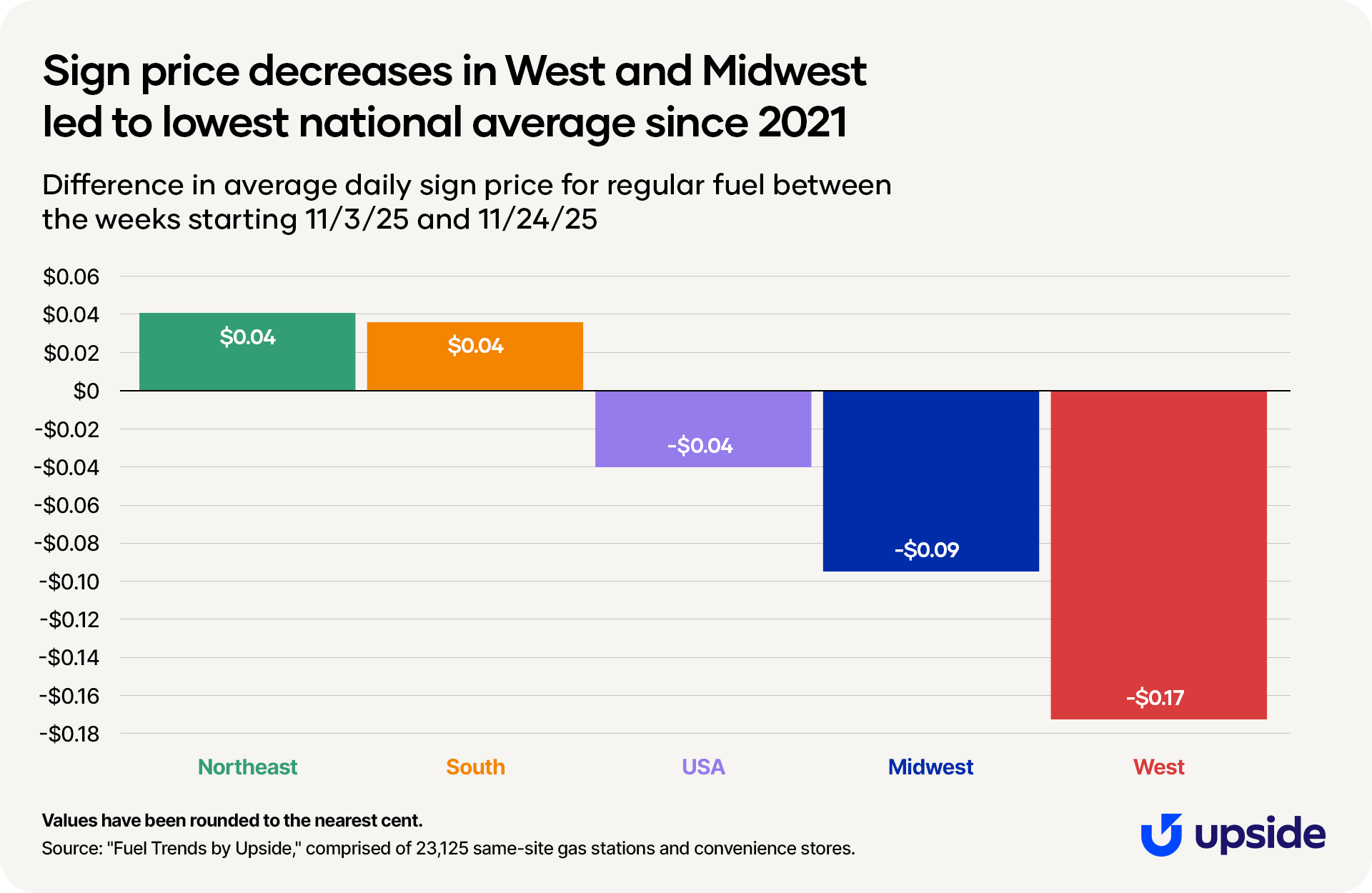
But where did the exceptionally low prices come from? We already mentioned reduced travel, high refinery utilization, and cheaper crude prices as all ingredients in the outcome. However, if that was all, the price changes should’ve been more even across regions month-over-month. Instead, price decreases at stations in the Midwest and West drove down the average price to record levels.
Predictions and considerations
Closing the year with low prices and low demand
The U.S. Energy Information Administration forecasts retail gasoline prices to be 10 cents per gallon cheaper in 2026 than they were in 2025.
That leaves us with consistent and ample supply along with low demand as we enter the slowest period of the year for fuel. Should those factors hold in December, we expect to see more periods of sub-$3 gas as we wrap up 2025.
Potential tailwinds:
1. November concluded the official hurricane season. For the first time since 2015, no named hurricanes made landfall in the United States. From now until next summer, there are reduced cyclone risks.
2. We’re following ongoing negotiations between Ukraine and Russia to end their ongoing war. A possible peace deal between the two nations would increase the supply of global oil.
Potential headwinds:
1. As we mentioned above, consumers travel less often in the cold weather. In 2024, the slowest stretch for fuel demand all year long occurred in the final week of December, Christmas and New Year’s Day.
2. With market pressures like low wage growth and stubborn inflation putting pressure on the economy, consumers are more likely to be feeling pessimistic than optimistic. Our second annual Consumer Spend Report has more about consumer sentiments and how they translate into shopping behavior.
Want a closer look at the data?
Check out our insights hub with all our fuel and convenience monthly updates, plus special industry reports.



Request a demo
Request a demo of our platform with no obligation. Our team of industry experts will reach out to learn more about your unique business needs.


