


What we cover

More than 90% of your grocery shoppers are actively visiting your competitors, and the reasons why are diverging in ways most retention strategies aren’t built to handle.
Insights from Upside's latest Consumer Spend Report — based on more than 10 billion retail transactions and surveys from over 11,000 consumers and retailers — reveal two forces reshaping grocery behavior today: widespread uncommitted shopping and a widening income divide. Together, they are redefining how households decide where to spend.
My recent conversation with Mark Kotcher of Save A Lot, hosted by Progressive Grocer, explored how these trends are playing out in stores across the country. Here are six takeaways from that conversation that every grocer should keep in mind as customer behavior continues to evolve.
1. Your uncommitted majority is bigger than you think
Today’s grocery environment is shaped by two dynamics: pressure and permission.
Pressure comes from continued economic strain, like lingering inflation, cost fatigue, tariffs, and a weakening job market. At the same time, retailers have given shoppers unprecedented permission to shop around. Digital tools make it easier than ever to compare prices, browse competitors, and split trips across stores.
The result is a growing population of uncommitted shoppers; in other words, customers who are prioritizing their household needs over brand loyalty. They cross-shop, seek value, and make decisions opportunistically.
Upside’s data shows more than 90% of grocery shoppers now fit this definition, visiting any single banner fewer than four times per month.

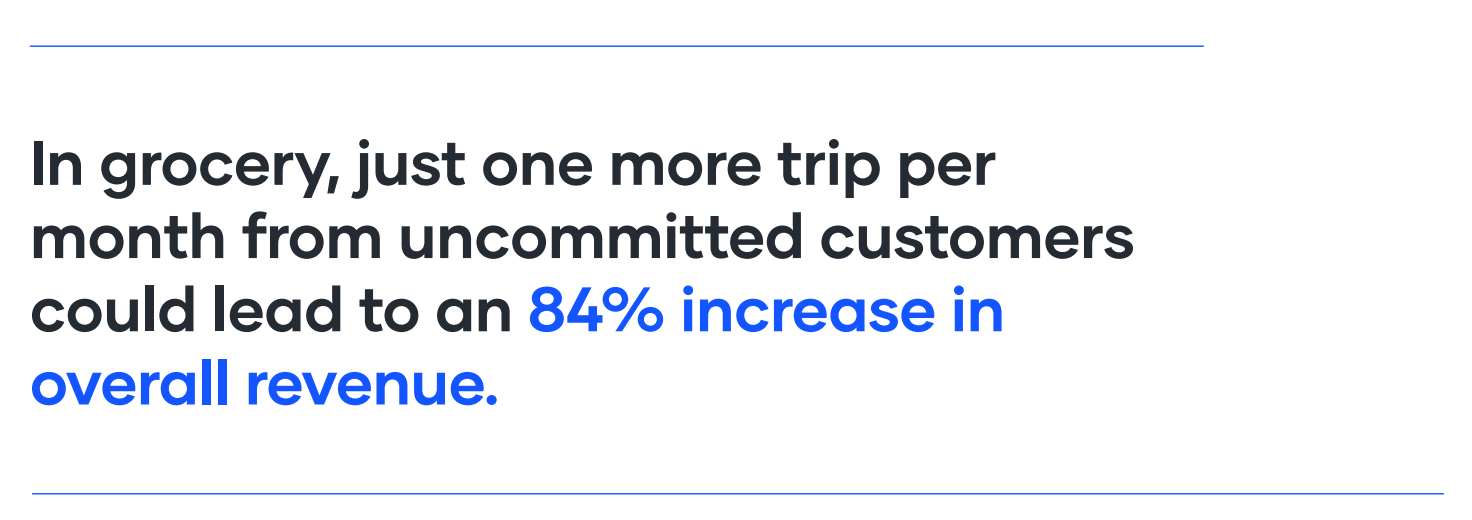
The opportunity is significant. These customers account for 72% of revenue at the average grocer, and just one more trip per month from each uncommitted shopper could increase overall revenue by 84%. Getting them to change their behavior, Mark explained, is a matter of forming habits.
"Grocery shopping and behavior is absolutely habitual,” he said. “Trying to get somebody to do something different, getting them back in that funnel, is probably one of the bigger challenges that we have."
The starting point, he emphasized, is empathy: "We want to earn their business. So it's not necessarily about changing behavior, it's about listening to them."
2. Same label, two very different shoppers
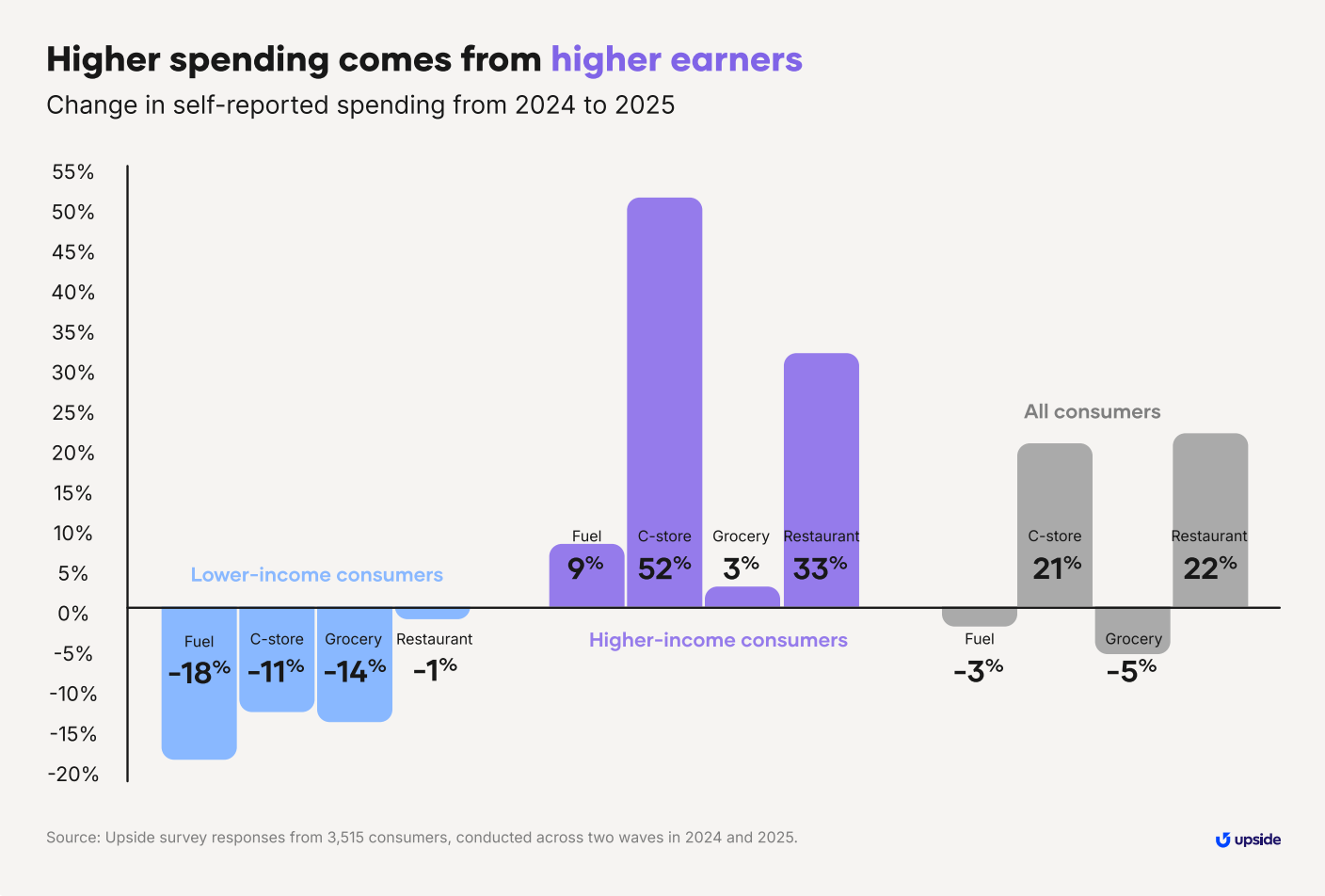
Alongside the rise in uncommitted behavior, we've been tracking another trend: consumer spending is diverging sharply by income. When survey responses were segmented by household income, a clear split emerged around the $75,000 threshold. We call it the “income divide.”
Households earning above that level expressed optimism and reported spending more than the prior year. Below that threshold, households reported cutting back in every category we measured: grocery, fuel, and restaurants.
The result resembles a K-shaped pattern, where increases from higher-income shoppers mask the struggles of lower-income households. Both cohorts are seeking value, but one is doing it selectively and creatively. The other is doing it out of necessity, reducing spend across all categories.
Save A Lot — founded in 1977 because its founder believed grocery margins weren't fair for working families — has long served value-focused shoppers. But, Kotcher says, the pressure is intensifying.
"It takes our shopper four times as long to recover from any economic downturn."
It’s worth repeating, though, that customers across the entire income spectrum exhibit uncommitted behavior. We’re seeing higher-income customers as well as lower-income customers trading down or out of categories altogether, prioritizing private label, avoiding higher-cost items, and comparing prices more aggressively across retailers.
Just because higher earners might be willing to spend more for the products they want does not mean that they’re spending at just one retailer.
3. “Best practice” digital investments might be backfiring
Retailers have invested heavily in digital tools like loyalty apps, online ordering, and price transparency to make their stores more accessible. It’s now easier for customers to arrive. But those investments have had an unintended consequence: It’s also now easier for them to leave.
Upside’s research shows that the average U.S. consumer now visits more than three grocery banners per month, an 8% increase year over year. And furthermore, frequent online grocery shoppers buy from three times as many stores as their in-store-only counterparts.
In other words, the channels designed to build loyalty are often enabling cross-shopping.
Save A Lot has seen this dynamic firsthand. In one focus group, a shopper described their decision process simply: "I check prices online and then I decide where to go." Mark’s interpretation was direct: "That's not loyalty, it's discipline."
Even when retailers are doing the right things digitally, the outcome can still be increased comparison shopping, and the data reflects that.
4. Why your loyalty program isn't changing behavior
Many retailers rely on loyalty programs as the foundation of their retention strategy. But participation alone doesn’t guarantee behavioral change.
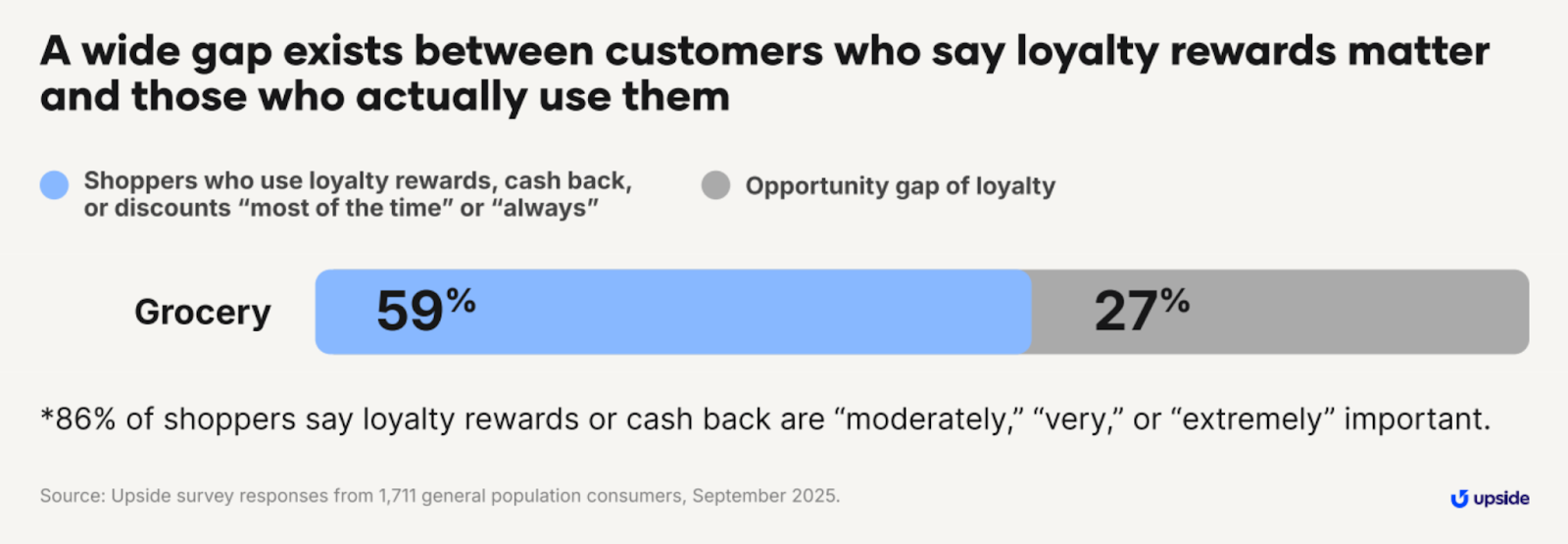
Upside’s research found a 30 percentage-point gap between consumers who say loyalty rewards matter and those who actually use a program regularly. Nearly half of the retailers we surveyed confirmed it: participation wasn't improving, and neither was loyal customer behavior.
If digital convenience encourages cross-shopping, what keeps customers coming back? Often, it’s what happens inside the store. Mark believes the biggest opportunity lies not in racing to the lowest price, but in understanding what shoppers actually value.
Save A Lot focuses heavily on operational simplicity and local ownership. Every store has an in-house butcher — a service that differentiates the experience from larger format retailers.
"You can ring the bell and say, ‘I'd really like to see this cut thin.’ For our team, it’s no problem. We’ll get you a fresh one and be right out," Mark said.
Save A Lot operates more than 160 locally-owned stores designed around speed and efficiency rather than sprawl. Mark posed a simple comparison: Can you get out of a big-box store in 22 minutes with everything you need? Heck no.
Local ownership also plays an important role in building trust. "Being hyper-local is how we set this company up,” he continued. “Our owners might actually be your neighbors."
5. Segmentation won’t cut it
For years, retailers have relied on segmentation to understand customers, which involves grouping shoppers into broad categories based on demographics or behavior. But today’s shopping patterns are becoming too individualized for those approaches to keep up.
Each shopper’s motivations, habits, and constraints are different. Understanding what will motivate a specific customer to make one additional trip increasingly requires insight at the individual level.
Across the Upside platform, machine learning helps analyze historical shopping behavior to identify what might motivate a specific shopper to visit a specific retailer.
Retailers are investing in similar capabilities internally as well. Save A Lot of exploring a white-label platform to bring more data in-house and deepen its understanding of shopper behavior.
"We're going to fundamentally understand our shopper way better than we have in the past, and we're going to find ways to incentivize them," Mark explained.
What comes next
Uncommitted shoppers now define the grocery landscape. The growing income divide adds another layer of complexity, making broad strategies less effective than they once were. But the opportunity is clear: Grocers who understand why customers behave the way they do, and who invest in ways to respond at the individual level, will win more trips.
For a deeper look at these trends, and to hear more from Save A Lot’s Mark Kotcher, watch the full conversation.



Request a demo
Request a demo of our platform with no obligation. Our team of industry experts will reach out to learn more about your unique business needs.


